Product Introduction
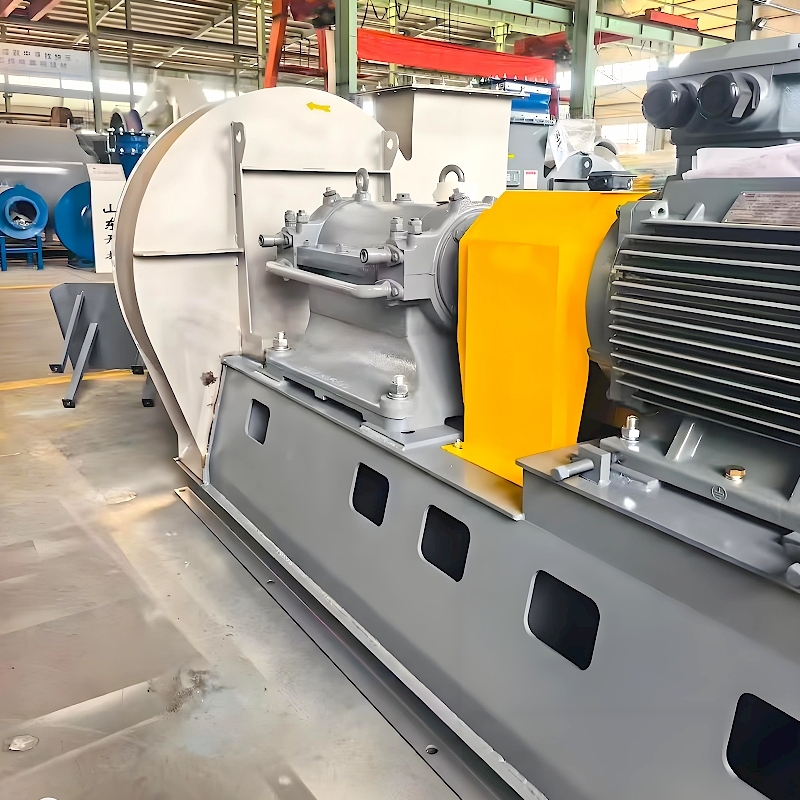
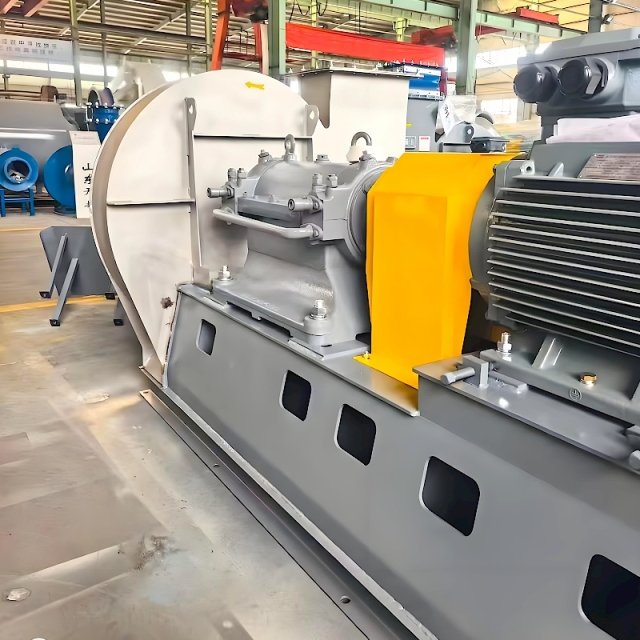
200°C High-Temperature Centrifugal Fan
In industrial settings such as iron and steel smelting, chemical production, and oven drying, conveying media at temperatures reaching 200°C is a common operational requirement.
However, standard centrifugal fans encounter issues—such as bearing lubrication failure and impeller deformation—when operating in environments exceeding 80°C. Operating conditions at 200°C pose systemic challenges regarding fan materials, cooling systems, and sealing structures.
Understanding these technical aspects is a prerequisite for proper equipment selection and the prevention of premature equipment failure.
Core Challenges Posed by 200°C Temperatures to Centrifugal Fans
Standard centrifugal fans are typically designed for operating temperatures below 80°C; exceeding this threshold causes problems to emerge first in three critical areas. Bearings represent the weakest link: standard bearing grease begins to soften and leak at temperatures above 60°C, and wear rates accelerate sharply when bearing temperatures consistently exceed 70°C.
Impeller materials also face rigorous demands; plastic impellers are unsuitable for temperatures above 55°C, while standard carbon steel is prone to creep deformation during prolonged operation at 200°C. Furthermore, motor insulation materials age significantly faster in high-temperature environments, directly shortening the equipment's service life.
Consequently, the design philosophy for centrifugal fans rated for 200°C is essentially a systems engineering approach centered on three dimensions: thermal isolation, heat dissipation, and heat resistance.
Analysis of Key Design Elements
Cooling impellers and thermal isolation structures serve as the first line of defense against high-temperature media. Taking the NM series from LTG AG as an example, the fan is equipped with aluminum cooling blades; when conveying 200°C media, the cooling impeller generates an airflow circulation behind the main impeller, effectively carrying heat away from the bearing area.
A double-layer galvanized steel casing combined with a 50mm mineral wool insulation layer physically isolates the high-temperature airflow from the motor and bearing systems, allowing the motor to operate outside the direct airflow path. Both approaches share a common principle: severing the heat conduction path between heat-resistant components (such as the impeller) and temperature-sensitive components (such as bearings and the motor) as much as possible.
The choice of impeller material directly determines the fan's maximum operating temperature. For 200°C applications, aluminum impellers offer a favorable cost-performance ratio; aluminum’s high thermal conductivity aids in uniform heat distribution, while its low density makes dynamic balancing easier to manage. For high-temperature flue gases with high dust content, welded heat-resistant stainless steel impellers are required; the W4-62 series utilizes this design, making it suitable for operating temperatures of 200–500°C and dust concentrations up to 150 mg/m³.
Bearing cooling is critical for the equipment's long-term, stable operation. Bearing housings for high-temperature fans typically employ air-cooling or water-cooling designs. Some models also feature dedicated heat dissipation channels behind the impeller to vent hot air out of the casing, thereby lowering the temperature in the bearing area. When selecting a fan, it is important to note that air-cooling suffices for most 200°C applications, whereas water-cooling offers greater reliability in environments with high ambient temperatures or scenarios involving continuous full-load operation.
Typical Application Scenarios
Centrifugal fans capable of withstanding 200°C are primarily used in industrial processes requiring hot air circulation or high-temperature exhaust.
Industrial ovens and drying equipment represent the most common applications; for instance, DF-series centrifugal fans designed for ovens operate continuously within the 180–200°C range to facilitate hot air circulation and moisture removal.
In chemical and petrochemical plants, high-temperature centrifugal fans are used for reactor exhaust and gas transport within solvent recovery systems. Induced draft and circulation systems for boilers and heat treatment furnaces also rely on these fans to maintain uniform internal temperatures and manage flue gas emissions.
The cement and building materials industries also make extensive use of this equipment for hot air circulation and waste heat recovery in kiln systems.
Selection and Maintenance Essentials
A frequently overlooked factor during the selection process is that motor power must be calculated based on the gas density corresponding to the actual maximum operating temperature, rather than the nominal temperature rating. Take a boiler induced-draft fan as an example: if the motor power is sized for 250°C but the actual operating temperature is only 180°C, the gas density increases, thereby raising the fan load and potentially causing motor overload. Additionally, the dust content of the medium must be considered during selection; if it exceeds 150 mg/m³, a wear-resistant impeller or a pre-installed dust removal device should be selected.
Regarding maintenance, lubrication management under high-temperature conditions requires stricter protocols than under ambient conditions. Fully synthetic grease with a dropping point at least 70°C above the operating temperature should be used, and the relubrication interval should be shortened by 30% to 50% compared to standard conditions. Bearing temperature monitoring is a key indicator during routine inspections; the normal operating temperature should not exceed 70°C, as abnormal temperature rises often serve as early warning signs of lubrication failure or misalignment.
The core value of a centrifugal fan capable of withstanding 200°C lies not merely in its temperature resistance, but in its ability to maintain stable airflow, bearing reliability, and controllable energy efficiency during continuous high-temperature operation. When selecting a model, it is recommended to provide the supplier with accurate data regarding medium temperature, dust content, operating mode (continuous vs. intermittent), and environmental conditions, allowing the supplier to calculate thermal expansion allowances and determine appropriate cooling solutions. Please contact our engineering team directly for technical specification sheets or assistance with model selection.