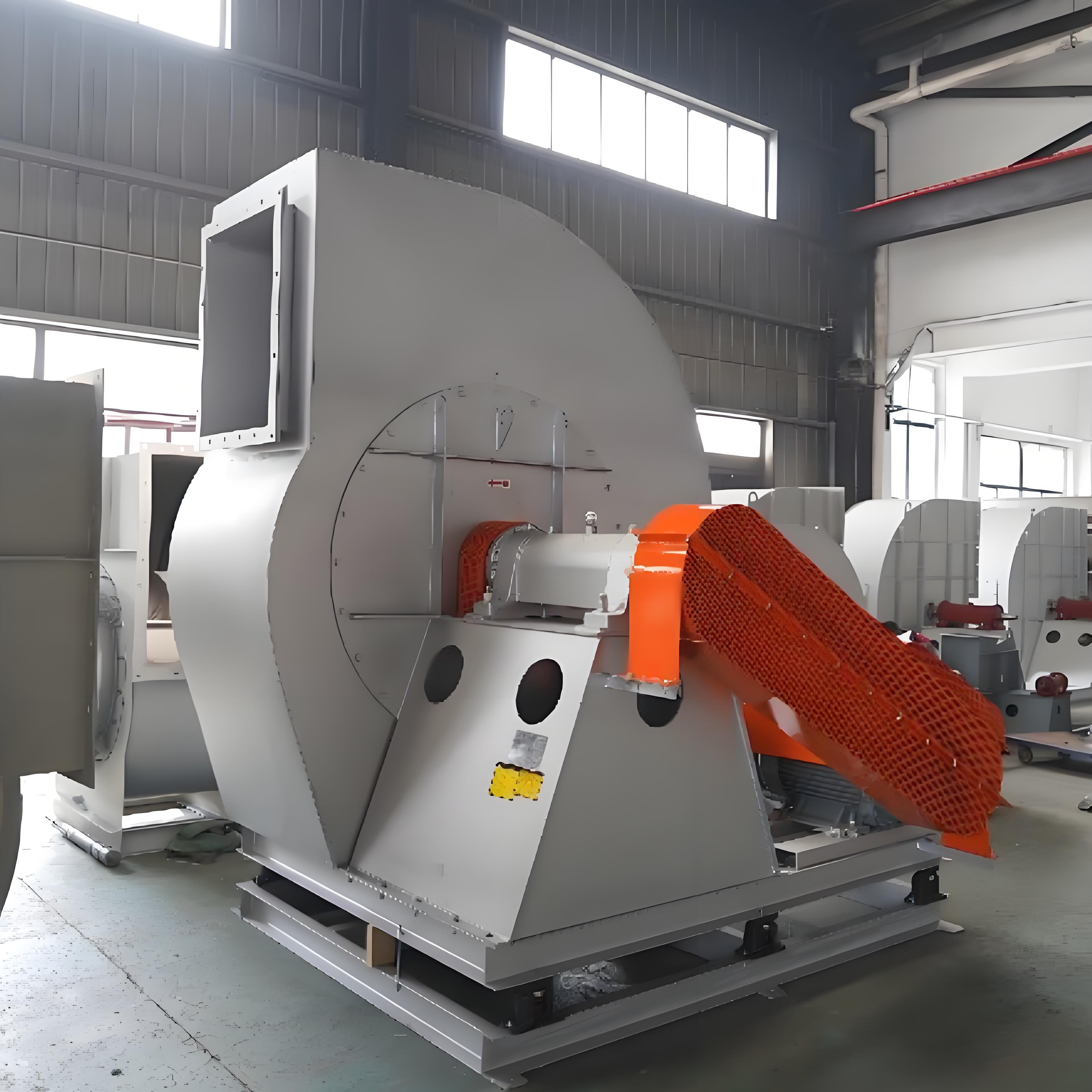
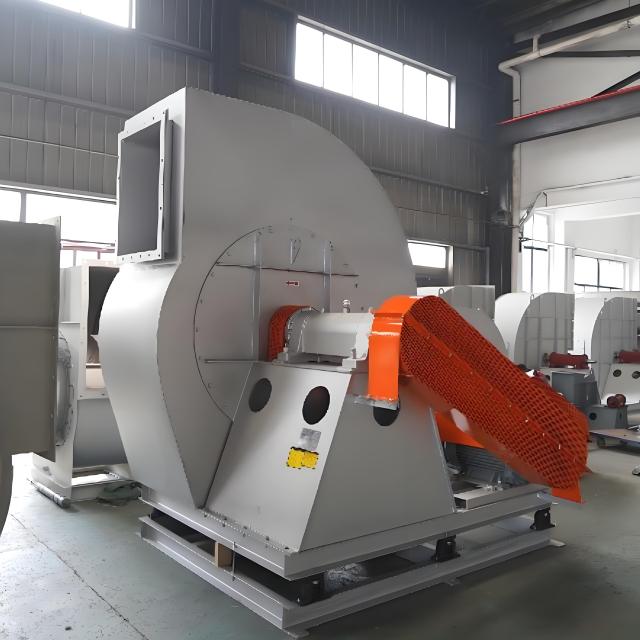
Chemical Plants High-Temperature Fan
In chemical production,
high-temperature fans are not merely auxiliary equipment; they are critical rotating machines essential for maintaining process continuity and operational safety. Whether used for reactor exhaust, incineration off-gas transport, air circulation in drying and roasting processes, or fire-related smoke extraction, the failure of a fan at high temperatures can lead to anything from unplanned shutdowns to cascading safety incidents.
This series of high-temperature fans for chemical plants is engineered with a focus on three core pillars: high-temperature resistance, explosion-proof compliance, and corrosion resistance. Designed for process gas environments ranging from 200°C to 780°C, these fans cater to a wide spectrum of requirements—from standard hot-air circulation to the handling of extreme-temperature flue gases.
Design Philosophy for High-Temperature Chemical Applications
The design of these fans is not centered on a single performance point, but rather on stability across the entire operating envelope. Conventional fans often suffer from accelerated component aging, sharp increases in energy consumption, and more frequent breakdowns when operating above 300°C—issues primarily caused by the degradation of material thermal strength and inadequate compensation for thermal expansion. This series addresses these challenges through three key design features:
Controlled Thermal Expansion: Precisely calculated allowances for thermal expansion are integrated between the impeller and the volute, as well as between the rotor and the bearing housing, preventing mechanical interference, misalignment, or the loss of critical sealing clearances during temperature fluctuations.
Dynamic Balancing Across the Full Temperature Range: Impellers are dynamically balanced to G2.5 precision (or higher), ensuring low vibration levels from ambient temperature up to the maximum operating temperature.
Thermal Isolation: Heat-insulating chambers or cooling structures are incorporated to separate high-temperature gas paths from sensitive components such as bearings and motors. High-temperature models come standard with water-cooled bearing housings, keeping bearing operating temperatures within safe, allowable limits.
Materials and Construction: A Graded Approach—From Heat-Resistant Steels to Superalloys
The choice of materials directly determines the service life of a fan under specific combinations of temperature and process media. This series offers a graded material selection strategy rather than a "one-size-fits-all" configuration:
For the medium-to-high temperature range (200–450°C), the impeller and casing are constructed from heat-resistant steel or 304/316L stainless steel, providing a balance of high-temperature strength and
corrosion resistance—ideal for applications such as exhaust ventilation for chemical reactors, circulation in paint-drying ovens, and boiler induced-draft systems. For high to ultra-high temperature ranges (450–780°C), critical components are upgraded to aerospace-grade superalloys. The impellers are precision-machined using five-axis CNC technology with micron-level tolerances to withstand the combined effects of thermal expansion and high-temperature gas corrosion. In highly corrosive environments—such as those involving acidic gases or sulfur recovery processes—gas-contact surfaces can be fabricated from duplex stainless steel or specialized alloys, with seals and coatings tailored to the specific properties of the process medium.
Impeller designs are selected based on the cleanliness and dust content of the medium: backward-curved blades are used for clean or lightly dust-laden high-temperature gases, offering high efficiency and low noise; radial blades are employed for high-temperature flue gases with higher dust concentrations, providing superior resistance to wear and particulate buildup. The volute casing features thickened plate construction and a streamlined diffuser design to minimize turbulence and the risk of localized overheating.
Explosion Protection and Sealing: Essential Compliance for Chemical Applications
In the selection of high-temperature fans for the chemical industry, explosion protection is not an optional feature but a fundamental entry requirement. Models in this series carry national (GB) and EU explosion-proof certifications; they are designed in accordance with the GB 3836 series standards for explosive gas atmospheres and can be configured to meet ATEX 2014/34/EU or IECEx certification requirements, depending on the project's location. Explosion-proof measures—including the use of explosion-proof motors, precise clearance control between the impeller and casing to prevent sparking, anti-static structural design, and positive-pressure protection for sealing cavities—are configured based on the specific gas group and hazardous zone classification.
The sealing system is purpose-engineered to accommodate the diverse nature of process gases encountered in chemical operations. When transporting flammable, toxic, or high-value gases, non-contact labyrinth seals or dry gas seals are employed to keep shaft-end leakage within engineering-specified limits. For moist, corrosive gases, sealing materials are carefully matched with appropriate purging schemes to prevent acidic condensate from entering the bearing housing. Before leaving the factory, each unit undergoes static pressure testing and mechanical running tests to verify seal integrity and vibration levels.
Drive Systems and Energy Efficiency: Operational Economy in High-Temperature Environments
High-temperature operating conditions often require continuous service, making the energy efficiency of the drive system a critical factor in total lifecycle costs. This series can be equipped with high-efficiency three-phase induction motors, variable-frequency motors, or permanent-magnet synchronous motors—meeting IE4/IE5 efficiency standards and complying with the energy efficiency limits set by GB 19761-2020. Variable-frequency speed control allows airflow to be adjusted according to actual process loads, eliminating the throttling losses associated with constant-speed operation. In chemical processes characterized by frequent partial-load operation, this adjustment capability can yield energy savings of 25%–30%.
For units operating at ultra-high temperatures or requiring exceptional reliability, magnetic bearing systems can be used in place of traditional mechanical bearings. Through sensors that monitor and adjust the system tens of thousands of times per second, five-degree-of-freedom magnetic bearings keep the rotor suspended without physical contact—even at high temperatures. This eliminates mechanical friction losses and the risk of lubricant failure, while simultaneously keeping vibration and noise to a minimum.
Typical Chemical Industry Applications
Reactor and Process Gas Exhaust: Designed for transporting high-temperature process off-gases containing corrosive components; materials and sealing systems are customized based on the specific medium to prevent leaks and component corrosion.
Incineration Off-Gas and Flue Gas Handling: Engineered for flue gases exceeding 450°C, these units utilize impellers made of heat-resistant steel or high-temperature alloys to ensure structural integrity, with radial-blade configurations available for dust-laden flue gases.
Drying and Calcination Air Circulation: Provides stable, high-temperature hot-air circulation for spray dryers, fluidized-bed dryers, and calciners, with variable-frequency control to adapt to changing drying curves. Fire-Related Smoke Exhaust and Emergency Ventilation: High-temperature exhaust fans in this series are capable of continuous operation for a specified duration even when smoke/gas temperatures exceed 280°C, meeting the reliability requirements for fire-related smoke exhaust systems in chemical processing plants.
Sulfur Recovery and Acid Gas Handling: Components in contact with the process gas are constructed from corrosion-resistant alloys, and the sealing system is designed to prevent the leakage of acid gases—making these units suitable for corrosive processes such as the Claus sulfur recovery process.
Compliance Standards and Quality Verification
The design, manufacturing, and testing of this series of high-temperature fans for the chemical industry adhere to the following standards (applied as required by specific project specifications):
API 673:
Centrifugal Fans for Petroleum, Chemical, and Gas Industry Services—covering design, rotor dynamics, materials, vibration limits, and mechanical running tests;
GB 3836 / ATEX 2014/34/EU / IECEx: Certification for equipment used in explosive atmospheres;
GB 19761-2020: Minimum allowable values of energy efficiency and energy efficiency grades for fans;
GB/T 1236 / ISO 5801 / AMCA 210: Standards for aerodynamic performance testing;
ISO 1940 G2.5: Impeller balancing grade;
ISO 10816-3: Evaluation of vibration severity.
Every fan undergoes performance and mechanical running tests prior to shipment. Critical pressure-retaining components are subjected to hydrostatic testing, and data regarding vibration, bearing temperatures, and sealing performance are recorded and provided as part of the equipment documentation.
Selection and Customization: From Operating Conditions to Final Delivery
Selecting a high-temperature fan for the chemical industry involves more than just considering airflow and pressure. Factors such as the composition of the medium (corrosivity, dust content, and explosion-hazard classification), maximum continuous and peak operating temperatures, installation space constraints, hazardous area (explosion-proof) zoning, and noise limits collectively dictate the choice of materials, sealing systems, drive mechanisms, and structural configuration. Our engineering process begins with the collection of operational data: we identify the required airflow and pressure operating points—incorporating appropriate safety margins—define the temperature range and corrosivity level of the medium, and determine the necessary explosion-proof certification requirements. Based on these parameters, we select the optimal impeller type, material specifications, sealing configuration, and drive mechanism, ultimately providing a comprehensive equipment selection proposal along with detailed dimensional and interface drawings. For non-standard applications—such as those involving extreme temperatures, space constraints, or specialized flange connections—we offer customized designs tailored to your specific site infrastructure and piping requirements.
Should you require equipment selection, performance calculations, or technical documentation for specific chemical processing applications, please submit the relevant medium parameters and operating conditions. Our engineering team will evaluate your requirements and provide a suitable solution along with configuration recommendations.