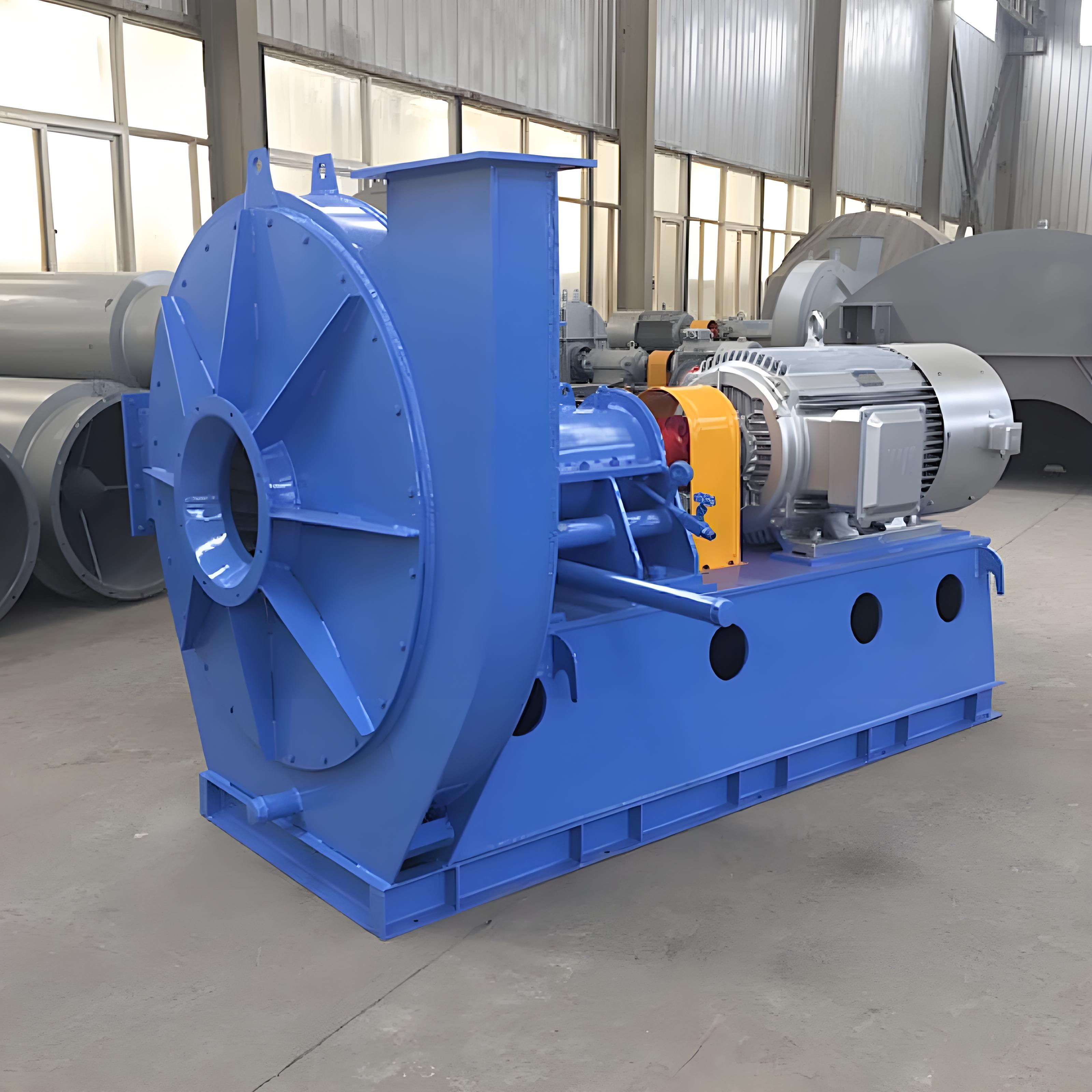
Combustion Air Fan
A combustion air fan is a core component in industrial combustion systems, responsible for the forced delivery of combustion air to burners, furnace chambers, or boilers. Its performance directly influences the completeness of fuel combustion, flame stability, and the overall energy consumption and emission profile of the thermal system. For equipment such as boilers, industrial furnaces, burners, and commercial cooking appliances, selecting a fan with the appropriate airflow, pressure, materials, and operational specifications is the primary safeguard for both combustion efficiency and operational safety.
A well-designed combustion air fan can improve combustion efficiency by 20% to 30% or more, while simultaneously reducing energy waste and pollutant emissions caused by incomplete combustion. Our product line ranges from precision, small-scale gas blowers to high-pressure centrifugal combustion fans. We offer customization options for materials, protection ratings, and drive mechanisms to suit diverse applications, including boiler heating, metallurgical heat treatment, chemical incineration, environmental desulfurization and denitrification (DeSOx/DeNOx) processes, and commercial kitchen equipment.
Matching Fan Types to Combustion Conditions
The selection of a combustion air fan should be based on the specific airflow and pressure requirements of the combustion system, rather than on a single power rating. Different combustion scenarios demand distinct combinations of airflow volume and pressure, which in turn dictate the appropriate fan structure.
For commercial cooking appliances, ovens, fireplaces, and small-scale gas heating equipment, medium-to-low-pressure multi-vane (turbo-type) blowers or straight-blade centrifugal fans are common choices. These compact units typically provide airflow ranging from tens to hundreds of cubic meters per hour, with pressure increases of approximately 2,000 Pa to 4,000 Pa. Operating at high rotational speeds, they deliver stable primary or secondary combustion air within confined spaces. Some models are designed for dual-purpose use—capable of both supplying combustion air and exhausting flue gases.
For industrial-scale applications—such as industrial boilers, hot-blast stoves, or large-scale burner systems—medium-to-high-pressure centrifugal fans serve as the primary solution. These fans utilize a centrifugal impeller as their core component. They offer air volume capacities ranging from thousands to tens of thousands of cubic meters per hour, with total pressure capabilities reaching several thousand to over ten thousand pascals. This allows them to overcome resistance from burner nozzles, ductwork valves, and furnace backpressure, ensuring that combustion air is delivered to the combustion zone at the required flow rate. For applications demanding higher pressure, multi-stage centrifugal combustion fans can be configured by connecting impellers in series via return channels, achieving greater pressure increases within a compact footprint.
In power plant boilers, large-scale industrial furnaces, and desulfurization/denitrification systems, combustion fans—often high-pressure centrifugal or axial-flow types—can handle air volumes reaching hundreds of thousands of cubic meters per hour, with motor power ratings spanning from tens to hundreds of kilowatts. These units prioritize operational efficiency, precise regulation, and long-term continuous reliability. They typically incorporate variable-frequency drives (VFDs) and inlet guide vane (IGV) control, allowing air output to dynamically adjust in response to combustion load fluctuations.
Materials, Protection, and Certification: Determining Suitability for Specific Operating Conditions
The operating environments for combustion fans are rarely benign; exposure to high-temperature flue gas radiation, corrosive atmospheres, heavy dust loads, or potentially explosive conditions necessitates material specifications and protective designs that far exceed those of standard ventilation equipment.
Regarding materials, conventional carbon steel is suitable for standard boiler and hot-blast furnace applications. For small-to-medium-sized gas-fired blowers, aluminized or galvanized steel sheets offer a balance of formability and heat resistance, capable of operating in environments with continuous exhaust temperatures up to 180°C (and transient peaks up to 240°C). In chemical processing, waste incineration, or systems involving corrosive media, stainless steel impellers and casings—or specialized anti-corrosion coatings—are the preferred choice. In environments where frictional sparks must be avoided, the use of aluminum alloy impellers and casings eliminates the potential for mechanical sparking at the source. Regarding protection and certification, combustion air fans intended for overseas markets or hazardous areas typically require fundamental certifications such as CE, CCC, and RoHS. In explosion-proof applications, both the motor and the complete unit must comply with ATEX, IECEx, or equivalent explosion-proof standards. For equipment used in high-temperature combustion processes, a motor protection rating of IP55 or higher helps prevent the ingress of dust and moisture, thereby extending the service life of windings and bearings. During the selection process, providing details on the combustion medium, ambient temperature, hazardous area classification, and required certifications is essential for obtaining an appropriate solution.
Determining Airflow and Pressure from Combustion Load: Key Logic for Selecting Combustion Air Fans
The selection of a combustion air fan should not be based on a simple one-to-one mapping with burner power; rather, it must be derived from the actual air requirements of the combustion system. The standard approach involves: calculating the hourly fuel consumption by dividing the burner’s rated thermal load by the fuel’s calorific value; determining the required volumetric airflow based on the theoretical air demand and a specified excess air coefficient; and then converting this value to parameters corresponding to standard conditions or the fan’s inlet conditions.
For air pressure, it is necessary to aggregate all system resistances—including the static air pressure required at the burner head, pressure drops along ducts and at specific components, resistance from valves and duct accessories, and backpressure within the furnace or flue—while incorporating a safety margin of at least 10%. Insufficient air pressure (even with adequate airflow) can lead to air shortages when the burner load increases, while excessive pressure combined with insufficient airflow may cause flame instability or shift the fan’s operating point away from its high-efficiency range.
For combustion systems that operate under variable loads, frequency conversion (VFD) and inlet guide vanes are common methods for balancing control precision with energy efficiency. By linking the fan’s air output to the oxygen content in the furnace or the combustion load signal, the fan can significantly reduce shaft power consumption during partial-load operation while maintaining a stable excess air level. Defining the minimum and maximum load ranges during the selection phase is essential for establishing the fan’s high-efficiency operating range and determining the appropriate control method.
Combustion Air Supply Across Diverse Industries
The application scope of combustion air fans extends far beyond boiler rooms.
In the iron, steel, and metallurgical industries, these fans supply combustion air to blast furnace hot-blast stoves, reheating furnaces, and heat-treatment lines; here, the reliability of continuous operation and the effectiveness of vibration control directly influence production throughput. In the chemical and environmental protection sectors—such as in incinerators, Regenerative Thermal Oxidizers (RTOs), and desulfurization or denitrification systems—fans must maintain stable airflow despite corrosive atmospheres or high dust loads. In these environments, material selection and sealing design are often more critical than energy efficiency metrics alone.
Combustion air fans also play an indispensable role in commercial and light-industrial settings. Small gas-fired blowers are essential for rapid ignition and uniform heat distribution in commercial cooking appliances, ovens, and fireplaces. Meanwhile, drying equipment, smelting and forging furnaces, and laboratory combustion apparatuses rely on compact, low-noise, medium-pressure fans to supply combustion air. For incinerators and emergency medical waste disposal units, the response speed and operational stability of the fan are directly linked to the completeness of combustion and the safety of exhaust emissions.
Regardless of the specific application, the core function of a combustion air fan remains constant: to deliver a precise volume and pressure of air into the combustion zone exactly when required, while ensuring the process remains controlled—even under challenging conditions such as high temperatures, corrosive environments, or explosion-proof requirements.
Operation, Maintenance, and Key Considerations
The lifespan and reliability of a combustion air fan depend largely on the quality of its installation foundation and the rigor of routine inspections. The fan base should be mounted on a level, solid foundation—utilizing vibration-dampening pads or anchor bolts embedded in concrete—to minimize the transmission of operational vibrations. Furthermore, the condition of the air intake filter is critical; a clogged filter is a common cause of insufficient airflow. Regularly recording bearing temperatures, motor current, and vibration levels helps identify early warning signs—such as impeller imbalance, loose couplings, or bearing wear—before these issues escalate into failures that cause system downtime.
During startup and shutdown, closing the air intake damper before starting the fan—and then gradually opening it once the unit is running smoothly—helps reduce the startup load. For fans being commissioned for the first time or restarted after a long period of inactivity, it is essential to manually rotate the shaft (barring) to ensure it turns freely and without any abnormal sounds or mechanical interference. In high-temperature operating conditions, special attention should be paid to the motor’s cooling fan and the lubrication status of the bearings to ensure the unit operates within its rated temperature limits.
Common Questions
Can combustion-support fans and standard ventilation fans be used interchangeably? Generally, this is not recommended. Combustion-support fans must provide stable airflow and pressure against the resistance characteristics of a combustion system; they often also require high-temperature resistance, explosion-proof capabilities, or corrosion resistance—specifications that standard ventilation fans—in terms of pressure capacity, material grade, and safety features—typically do not meet.
How can one determine if a combustion-support fan provides sufficient airflow for combustion requirements? A practical field method is to observe flame stability and flue gas oxygen levels across various load conditions. If the flame appears dim or the oxygen content drops as the load increases—or if opening the air damper further yields no significant increase in airflow—it often indicates that the fan’s airflow or pressure margin is insufficient, necessitating a review of the selection parameters.
What certifications are required for combustion-support fans? At a minimum, look for CE, CCC, or RoHS compliance. If the equipment is used in potentially explosive environments, verify the required explosion-proof certification (e.g., ATEX or IECEx). Projects in specific industries or regions may also need to comply with particular energy efficiency standards or safety regulations.
Finding a Combustion-Support Fan Solution Tailored to Your Combustion System
The true value of a combustion-support fan lies not in a single figure on a spec sheet, but in how well its airflow, pressure, materials, protective features, and control mechanisms align with the specific requirements of your combustion system. Please provide details regarding the burner type, rated heat load, fuel type, furnace back pressure, ambient temperature, any explosion-proof or anti-corrosion requirements, and the necessary certifications. Based on this information, our technical team will recommend the appropriate fan model and configuration. For specialized operating conditions, we offer custom designs—including tailored materials, coatings, drive mechanisms, and zero-leakage configurations—along with guidance on installation essentials and maintenance intervals, ensuring the fan delivers stable, long-term performance within your combustion system.