Product Introduction
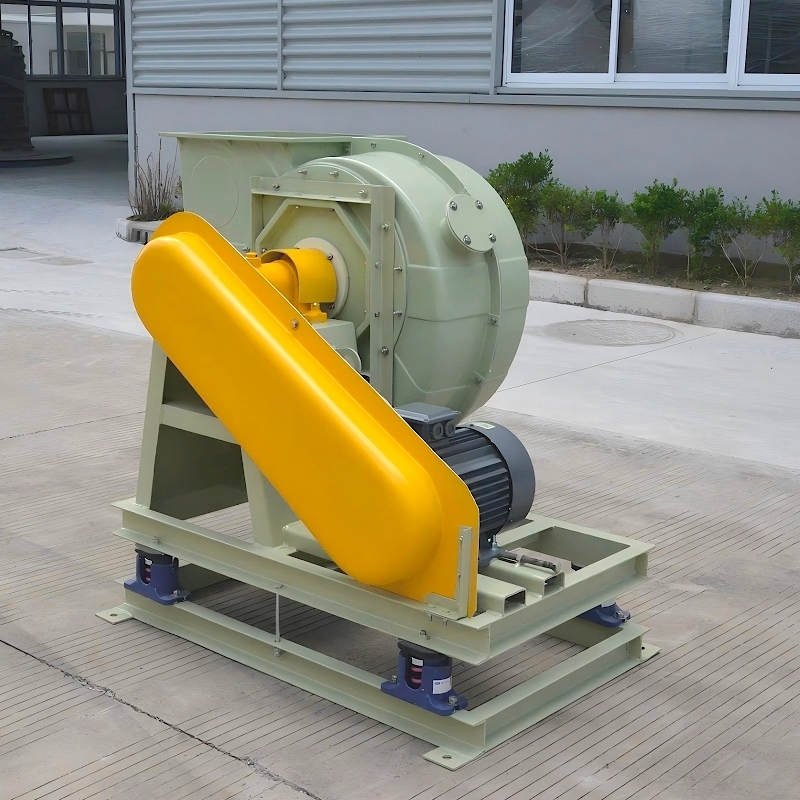
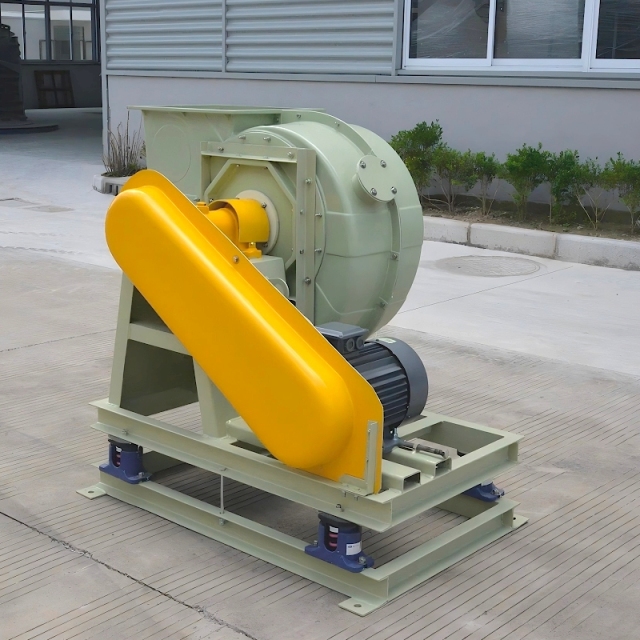
FRP Corrosion-Resistant Centrifugal Fan
In industrial environments—such as chemical processing, electroplating, and laboratories—where acidic or alkaline corrosive gases are present, standard metal fans often struggle to operate stably over the long term. Thanks to its excellent corrosion resistance and stable aerodynamic design, the FRP (Fiberglass Reinforced Plastic) corrosion-resistant centrifugal fan is the ideal choice for such operating conditions.
Product Overview
This fan is manufactured using fiberglass reinforced plastic (FRP) as the primary material via a molding process. The assembly comprises components such as the impeller, housing, air inlet, and motor mount; all parts in contact with corrosive gases are made of FRP, fundamentally eliminating the rusting and corrosion issues associated with metal fans.
Material Advantages
FRP provides the fan with outstanding chemical stability. It resists corrosion from inorganic acids (such as hydrochloric, sulfuric, and nitric acids) as well as various organic acids, alkalis, and salt solutions. Compared to stainless steel fans, FRP fans perform exceptionally well in humid environments containing chloride ions, as they are immune to pitting and stress corrosion cracking. Additionally, FRP is lightweight yet strong, facilitating easy installation and maintenance, while offering a service life of over ten years.
Structural Features
The fan utilizes a backward-curved centrifugal impeller design that is dynamically balanced to ensure smooth, low-noise operation. The connection between the impeller and the shaft undergoes anti-corrosion treatment to prevent failure caused by fastener corrosion in corrosive media. The housing is manufactured using an integral molding process; its smooth inner walls minimize airflow resistance and enhance ventilation efficiency. An optimal clearance is maintained between the air inlet and the impeller to ensure smooth intake while preventing gas backflow.
Performance Parameters
This series offers airflow capacities ranging from hundreds to tens of thousands of cubic meters per hour, with total pressure specifications selectable based on operational requirements. Motor options include standard three-phase asynchronous motors or explosion-proof motors, making the fan suitable for various hazard-level environments. The fan can be equipped with a variable frequency drive (VFD) for stepless airflow regulation, meeting the need for flexible control during process variations.
Applications
FRP (Fiber-Reinforced Plastic) anti-corrosion centrifugal fans are widely used in scenarios such as exhaust systems for chemical workshops, edge extraction for electroplating tanks, laboratory fume hood exhaust, odor collection at wastewater treatment plants, and air purification in pharmaceutical facilities. This series is suitable for any ventilation application involving corrosive gases or humid vapors containing acids or alkalis across industries such as semiconductors, metallurgy, and food processing.
Selection Recommendations
When selecting a fan, it is essential to specify the composition, concentration, temperature, and dust content of the conveyed gas. Different media impose varying requirements on the FRP material; if necessary, specific resin grades (such as vinyl ester resin) can be selected to enhance resistance to particular corrosive agents. We recommend providing specific operating parameters so that our technical team can assist in determining the appropriate fan model and motor configuration.
Conclusion
With key advantages such as material corrosion resistance, sound structural design, and reliable operation, FRP anti-corrosion centrifugal fans offer an economical and durable solution for ventilation and exhaust in corrosive environments. Please contact us for detailed technical specifications and selection support.