Product Introduction
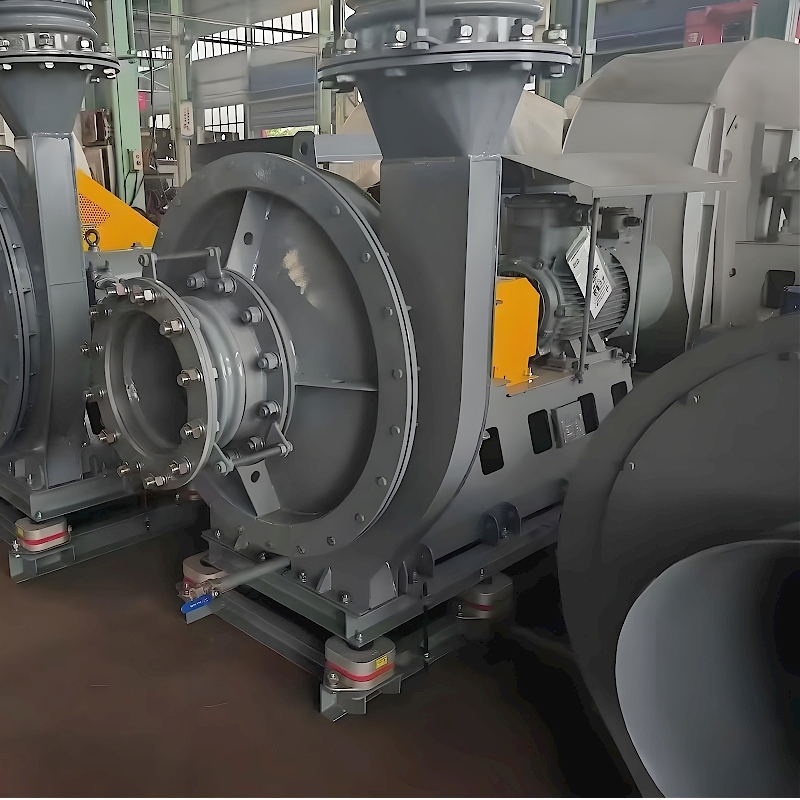
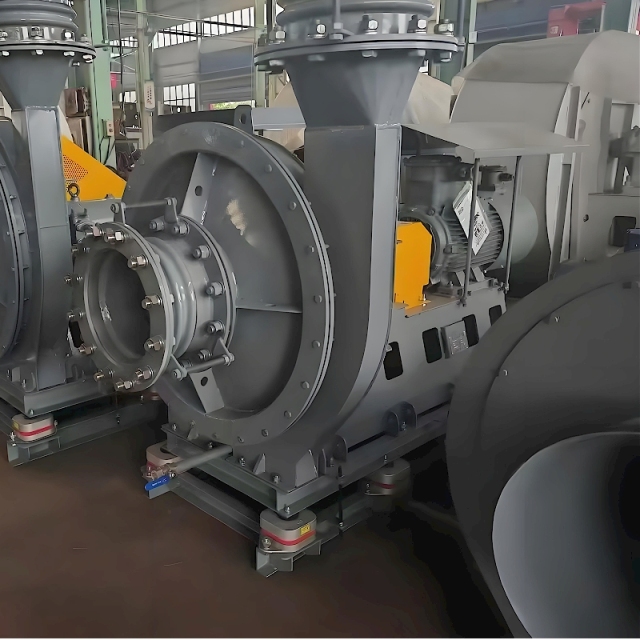
Gas Pressurization Fan
Gas pressurization fans are centrifugal boosting units specifically designed for the transport of gases—such as those from blast furnaces, coke ovens, and converters—within industrial gas stations. They are also suitable for handling other gases that require strict containment, including ammonia, biogas, and methane. Their primary function is to overcome resistance within pipelines and equipment as gas is transported from its source to the point of use, raising the gas pressure to the levels required for specific industrial processes—thereby ensuring a stable supply for combustion, heating, or power generation.
Why Sealing and Explosion-Proofing Are Paramount in Environments with Flammable or Explosive Gases
Industrial gases (such as blast furnace gas, coke oven gas, and converter gas) contain components like carbon monoxide, hydrogen, and methane. A leak not only results in energy waste but also poses a direct threat to personnel safety and the continuity of production. Gas pressurization fans address these risks through three key approaches:
Sealing: Standard models utilize a combination of soft-packing seals, centrifugal seals, and nitrogen-purged seals. Nitrogen-purged sealing, in particular, creates a continuous gas barrier at the shaft end, enabling a design goal of zero gas leakage. Compared to traditional designs that rely solely on mechanical seals, nitrogen-purged systems offer superior long-term sealing stability, reducing unplanned downtime caused by seal wear.
Explosion-Proofing: The integrated motors feature an explosion-proof rating of dⅡBT4 and an ingress protection (IP) rating of IP44, IP54, or IP55, making them suitable for environments containing Class ⅡB, T4-temperature-class explosive gases. Impellers can be constructed from explosion-proof cast aluminum or specialized alloys, eliminating the risk of frictional sparks from rotating components.
Operational Safety: These fans can be equipped with variable-frequency drives (VFDs) and PLC-based closed-loop control systems. These systems adjust rotational speed in real-time based on the pressure in the main discharge pipeline, ensuring a constant supply pressure while minimizing the risks of surging or significant pressure fluctuations.
Key Design Features: Engineered for Continuous Industrial Operation
Impeller. The blade profile is optimized based on high-efficiency centrifugal fan theory. Depending on the corrosivity of the medium, the components are manufactured from stainless steel or specialized alloys. Following fabrication, the assembly undergoes both static and dynamic balancing to achieve a G4 precision grade (surpassing the national standard of G6.3), ensuring controlled vibration levels during high-speed rotation.
Casing and Structural Design. The unit features an integrated welded-plate structure, with high-quality carbon steel components welded to the base to ensure overall rigidity. The interior of the casing is coated with epoxy resin to enhance resistance against corrosion from sulfur-containing or moisture-laden gases. A steam-purging connection is provided on the upper section of the casing, while a drain valve is located at the bottom, facilitating routine maintenance and purging during system shutdowns.
Configurable Outlet Orientation. The fan can be configured for either clockwise or counter-clockwise rotation, with outlet angles available at 0°, 90°, 180°, and other positions. This flexibility allows for seamless alignment with on-site piping layouts, reducing the need for elbows and minimizing the effort required for installation or retrofitting.
Maintenance Accessibility. Certain models utilize a split-casing design, allowing the rotor to be removed for inspection or repair without the need to dismantle the inlet or outlet piping—thereby shortening downtime during maintenance.
Typical Application Scenarios
Iron and Steel Metallurgy. Used for pressurizing gas within the pipeline networks of blast furnaces, coke ovens, and converters, transporting gas from purification stages to hot-blast stoves, steel-rolling reheating furnaces, or power generation units. The fans must maintain stable flow and pressure output even when handling gases containing dust and tar, or gases subject to temperature fluctuations.
Chemical Industry and Gas Stations. In industrial gas stations, these pressure-boosting fans facilitate the delivery of producer gas. In chemical processes, they are used for the transport and pressure enhancement of reaction gases, exhaust gases, or byproduct gases.
Biogas and Biomass Gas. Used for the collection and pressurized transport of methane-rich gases, such as biogas from wastewater treatment or gas derived from biomass gasification. These applications require robust shaft-end sealing to prevent the leakage of combustible gases.
Construction Materials and Kilns. Provides a stable supply of fuel gas or combustion-supporting air for lime kilns, ceramic kilns, and drying kilns used in the production of refractory materials. Key Variables for Equipment Selection
The performance parameters of gas-pressurizing fans are calibrated based on standard intake conditions (atmospheric pressure of 101,325 Pa, relative humidity of 50%, medium temperature of 20°C, and density of 1.2 kg/m³). If the actual density or temperature of the gas being transported differs from these standard conditions, the flow rate and total pressure must be recalculated. When selecting equipment, the following information should be clarified:
Medium Type and Composition: Whether the gas is blast furnace gas, coke oven gas, converter gas, biogas, or a mixture; this directly influences the choice of materials and sealing solutions.
Inlet Flow Rate (Operating Conditions): Measured in m³/h; it must be specified whether this refers to the flow rate under standard conditions or actual operating conditions.
Required Pressure Boost / Total Pressure: Measured in Pa or kPa; this should account for both the resistance of the piping network and the backpressure from downstream equipment.
Medium Temperature and Dust Content: Temperature affects the required heat resistance of materials and the calculation of gas density; dust content influences the wear rate of the impeller and the frequency of cleaning.
Explosion-Proof Zone Classification: Identify the zone classification and gas group for the potentially explosive atmosphere at the site to ensure the motor meets the required explosion-proof rating (e.g., dⅡBT4 or higher).
Regulation Method: For stable operating conditions, a constant-speed drive may be sufficient; however, in scenarios with significant load fluctuations, variable-frequency drive (VFD) control offers advantages in terms of energy efficiency and constant-pressure regulation.
Frequently Asked Questions
What is the difference between a gas-pressurizing fan and a Roots blower? Gas-pressurizing fans utilize a centrifugal design, characterized by a relatively flat performance curve, a wide range of flow regulation, and lower operating noise. Roots blowers are positive-displacement machines; while their flow rate is less affected by backpressure, they typically generate higher levels of noise and vibration. For gas-transport applications that require adaptation to pressure fluctuations in the piping network or operation at partial loads, centrifugal pressurizing fans are better suited due to their superior flexibility in regulation and energy performance.
Does a nitrogen seal eliminate the need for maintenance? While a nitrogen seal significantly reduces the risk of leakage at the shaft end, the pressure, flow rate, and purity of the nitrogen supply must be continuously monitored. The system must be equipped with alarms or interlock protection to trigger in the event of a loss of the sealing gas supply. Furthermore, the condition of the sealing components and the integrity of the nitrogen piping must be inspected periodically during routine operation.
Can the fan handle coal gas containing tar or dust? Yes, but the cleanliness of the medium must be specified during the equipment selection process. For coal gas with a high tar content, the fan casing should be designed to facilitate in-line purging and include steam connection ports. In applications with high dust concentrations, the impeller material must be selected for wear resistance, and the inspection frequency should be increased accordingly.