Product Introduction
Grate Cooler Cooling Fan
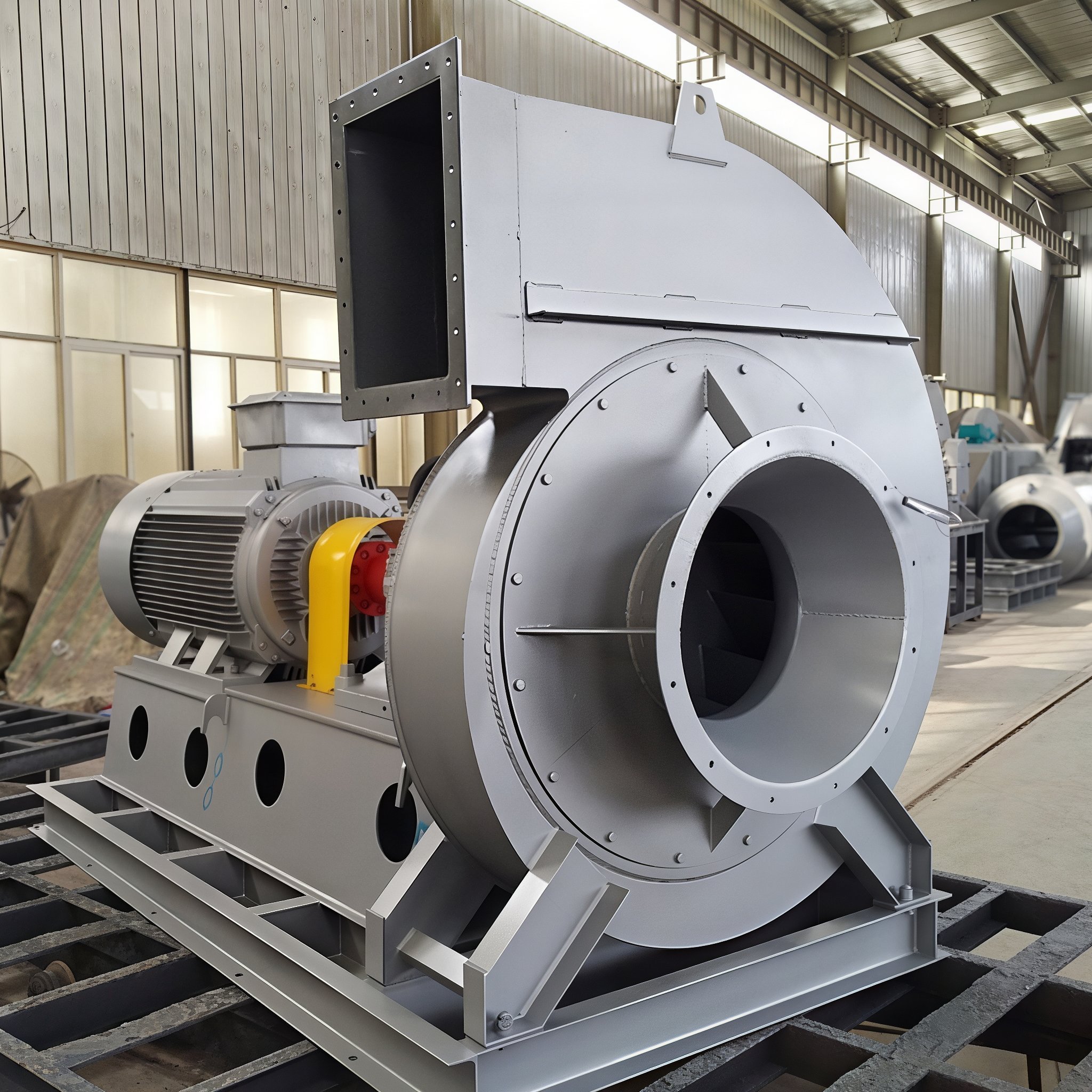
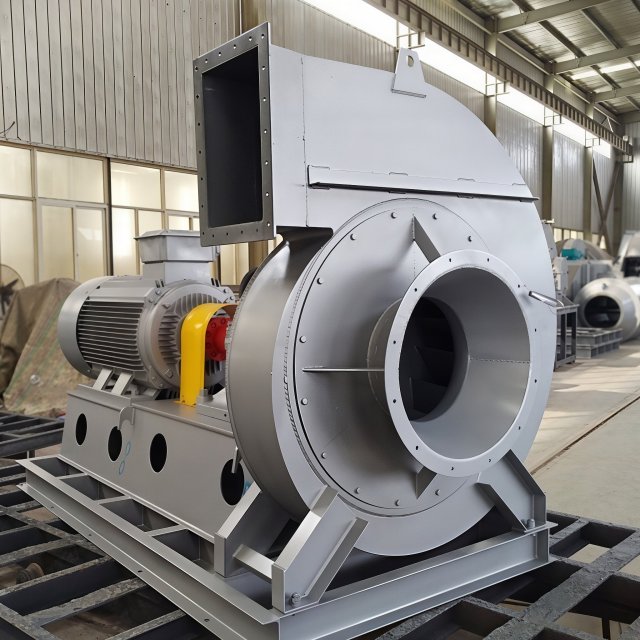
Grate cooler cooling fans are essential auxiliary equipment for the grate cooler located at the kiln discharge end of a cement clinker production system. Their primary function is to force cold air into the grate bed, rapidly cooling the high-temperature clinker. The performance of these fans directly impacts clinker quality, the efficiency of waste heat recovery, and the overall power consumption of the production line. A well-designed cooling fan must be capable of delivering high-pressure, stable-volume airflow—even when subjected to intense thermal radiation from 1300°C clinker and dust-laden gas streams—to quickly reduce clinker temperatures to approximately 100°C, while simultaneously supplying high-quality secondary and tertiary air to the rotary kiln and calciner.
Product Positioning: Specialized Fans for Sectional Cooling in Grate Coolers
The cooling process in a grate cooler is not a "one-size-fits-all" operation. The initial section requires rapid cooling to lock in the mineral activity of the clinker and inhibit crystal growth; the middle section requires uniform cooling to stabilize the resistance of the clinker bed; and the final section focuses on waste heat recovery by raising the temperature of the air used for heat reclamation. The design logic for these cooling fans is specifically tailored to meet these distinct, stage-based requirements.
In terms of scale, a single grate cooler is typically equipped with 5 to 18 cooling fans, supporting cement production lines with daily capacities ranging from 1,000 to 10,000 tons. The intake medium is ambient air, with a design temperature generally between 20°C and 32°C, and a dust concentration typically controlled to below 150 mg/m³.
Core Advantages
High-efficiency aerodynamic design for reduced power consumption. Featuring an impeller with backward-curved blades—optimized through Computational Fluid Dynamics (CFD) flow field simulation—the fan achieves an operating efficiency of over 86%.
Flat performance curve with excellent adaptability to varying operating conditions. During grate cooler operation, factors such as clinker bed thickness, clinker particle size, and fluctuations in kiln conditions can cause changes in system resistance. The flat performance curve of backward-curved blade fans ensures that when resistance across the grate bed increases, the airflow volume decreases only slightly and gradually. This maintains a relatively stable cooling airflow, preventing the sharp drops in airflow—and the resulting issues like "red rivers" (clinker overheating) or insufficient rapid cooling—that can occur with forward-curved blade fans when resistance fluctuates.
Precise, zone-specific airflow distribution enables both effective cooling and waste heat recovery. Fans can be configured with tailored air pressure and volume settings to meet the specific process requirements of the rapid-cooling, primary-cooling, and residual-cooling zones. By utilizing variable-frequency drives (VFDs) or inlet control dampers, the airflow in each wind chamber can be adjusted independently based on temperature feedback. This ensures uniform clinker cooling and stable discharge temperatures, while also providing a consistent, high-quality source of hot air for waste heat power generation systems.
Robust construction ensures long-term, reliable operation. The design features a cantilevered, single-inlet structure, a high-precision CNC-machined bearing housing, and an impeller assembly balanced to the G2.5 standard—all of which provide a foundation for stable, long-term performance. Key rotating components are sourced from highly reliable brands, and the bearing housing is designed for easy disassembly and maintenance, effectively reducing the risk of unplanned downtime in the continuous production environments typical of cement plants.
Low noise and reduced maintenance costs. Backward-curved blades are inherently quieter; when combined with an optimized silencer—which offers approximately 50% less resistance than conventional designs—operational noise is effectively controlled. Integrated flow and vibration monitoring systems allow for real-time tracking of the fan’s operating status, shifting the maintenance approach from "periodic disassembly and inspection" to "predictive, condition-based maintenance."
Typical Applications
These cooling fans for grate coolers are widely used across various types of grate coolers for cement rotary kilns, including second- and third-generation air-beam grate coolers, as well as fourth-generation reciprocating (stepped) grate coolers. They are well-established in sectors such as cement production and the resource utilization of coal gangue, and can also be adapted for similar applications, such as cooling in steel sintering processes. In cement production lines located on plateaus or at high altitudes, reduced air density poses additional challenges for fan performance. Consequently, air volume and pressure parameters must be adjusted for altitude during the selection process. Fans with backward-curved blades are particularly well-suited for these conditions, as they offer a broader high-efficiency operating range.
Technical Parameter Overview (Typical Ranges)
The selection parameters for grate cooler cooling fans vary based on the scale of the production line, the specific model of the grate cooler, and the air distribution scheme across different zones.
For mainstream applications, typical parameters for an individual fan include an air volume of 45,000–120,000 m³/h and a static pressure of 4,500–14,000 Pa. The required motor power is determined by the specific combination of air volume and pressure, typically ranging from tens to hundreds of kilowatts.
Selection Criteria: Why Backward-Curved Blades Are Preferred for Grate Coolers
Selecting a cooling fan for a grate cooler is not simply about maximizing air volume or pressure; rather, it is about identifying a performance curve that aligns with the variable operating conditions of the grate cooler itself.
Energy-Saving Value: From Individual Fan Efficiency to System-Wide Consumption Reduction
The energy-saving potential of grate cooler cooling fans extends beyond the efficiency of the fan unit alone. In practice, traditional constant-speed fans—often designed with excessive safety margins—frequently operate far from their optimal, most economical points, leading to persistent, unnecessary power consumption. A common approach for upgrading these systems involves pairing high-efficiency, backward-curved blade fans with variable-frequency drives (VFDs) or permanent-magnet synchronous motors, allowing fan speeds to be adjusted in real-time based on the cooling requirements of individual air zones.
The effectiveness of a fan’s selection and configuration is ultimately reflected in three quantifiable outcomes: the stability and control of clinker temperature, the suitability of waste-heat air temperatures for heat recovery, and the electricity consumption for cooling per ton of clinker (relative to design targets). Using these three operational metrics as benchmarks to determine fan specifications and control strategies is far more aligned with the practical realities of cement production than merely chasing peak performance in a single category.