Product Introduction
Polypropylene Corrosion-Resistant Centrifugal Fan
Product Overview
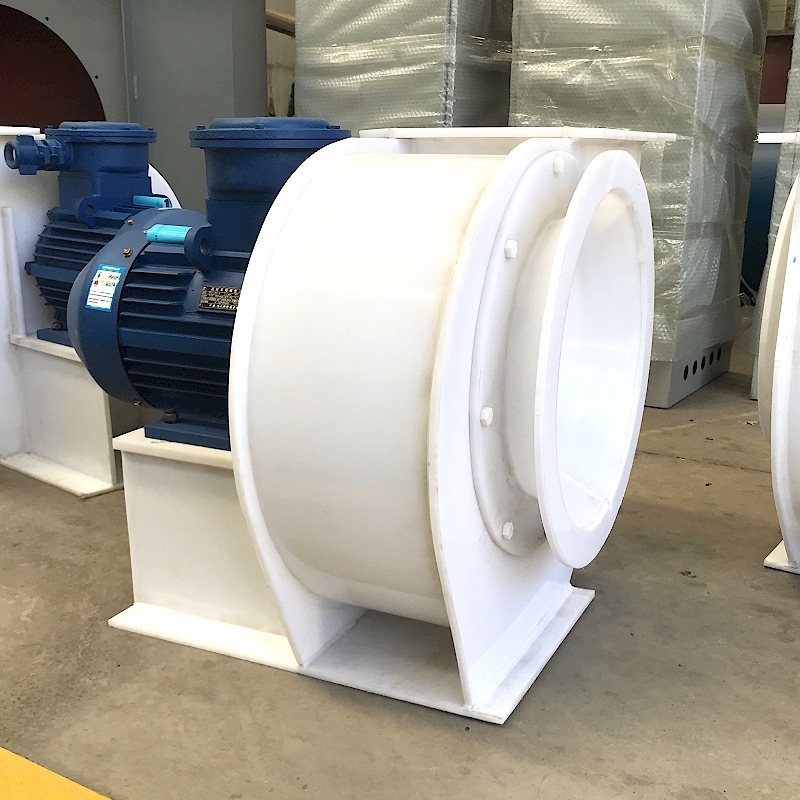
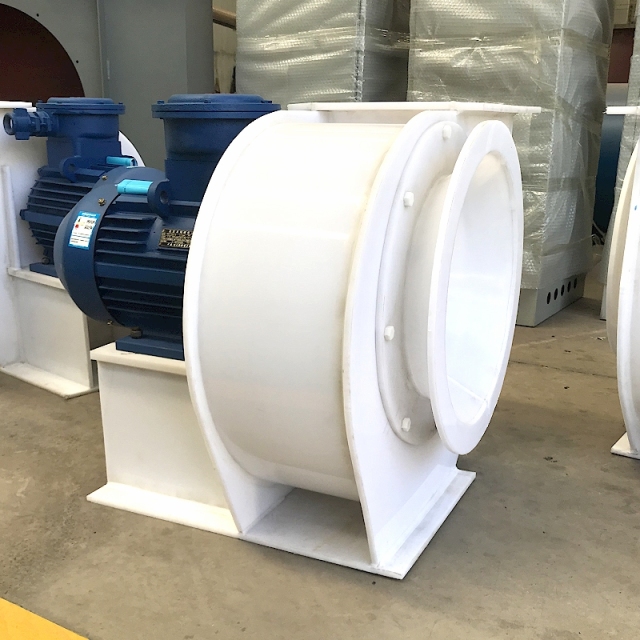
The polypropylene (PP) corrosion-resistant centrifugal fan is an industrial ventilation unit designed specifically for conveying corrosive gases. Constructed using high-quality polypropylene (PP) through integrated molding techniques, it features high strength, light weight, excellent chemical corrosion resistance, resistance to aging, and low noise levels.
Optimized based on the aerodynamic parameters of the metal F4-72 centrifugal fan, both the volute casing and the impeller are fabricated from modified, reinforced PP. This design ensures high aerodynamic efficiency while completely resolving the issues of rust and short service life associated with traditional metal fans in acidic or alkaline environments.
Serving as a core component in exhaust systems for industries such as chemical processing, electroplating, laboratories, and pharmaceuticals, this fan is an ideal choice for ventilation in corrosive operating conditions.
Material and Structural Advantages
The entire unit is constructed from pure polypropylene; components ranging from the impeller and volute casing to the air inlet are formed by heating, molding, and welding PP sheets, ensuring that no metal parts come into contact with the corrosive media.
The impeller consists of blades and a hub—both made of reinforced PP—offering excellent resistance to bending fatigue; it can withstand repeated flexing at ambient temperatures without damage.
The volute casing is fabricated from a single PP sheet, and the air inlet is joined to the casing body using an embedded welding process, ensuring structural airtightness and overall rigidity.
The unit utilizes a horizontal motor specifically designed for corrosion-resistant centrifugal fans, featuring an anti-corrosion coating on the motor body. A vibration-dampening base is included as standard, effectively minimizing the transmission of operational vibrations to the ductwork and support structures.
Polypropylene exhibits excellent resistance to a wide range of acidic, alkaline, and saline media, enabling the safe conveyance of corrosive gases such as sulfuric acid, nitric acid, hydrochloric acid, hydrofluoric acid, potassium hydroxide, and aqueous ammonia. The fan is suitable for operating temperatures ranging from -10°C to 60°C, with a medium relative humidity of up to 100% and a dust content not exceeding 100 mg/m³.
Please note that this fan is not suitable for conveying special corrosive gases such as aromatic compounds, halogenated derivatives of aliphatic and aromatic hydrocarbons, or ketones; users should verify the compatibility of the fan based on the specific chemical composition of the medium in their actual operating conditions.
Working Principle and Performance
The anti-corrosive polypropylene centrifugal fan operates on the principle of centrifugal ventilation: as the motor drives the impeller to rotate at high speed, the gas between the blades is thrown outward by centrifugal force. This increases the gas flow velocity and converts kinetic energy into static pressure energy before the gas is finally discharged through the exhaust outlet. Simultaneously, a negative pressure zone forms at the center of the impeller, drawing in external air under atmospheric pressure to ensure continuous airflow.
Application Areas
These anti-corrosive polypropylene centrifugal fans have a wide range of applications across various industries, including scientific research laboratories, chemical production, metallurgy, electronics manufacturing, pharmaceuticals, textile printing and dyeing, electroplating and pickling, mine ventilation, and environmental protection equipment.
In laboratory fume hoods and exhaust systems, the fan effectively removes acidic and alkaline exhaust gases generated during experiments;
In electroplating and PCB manufacturing workshops, it continuously handles corrosive gases emitted from pickling tanks;
In the pharmaceutical and chemical sectors, it is widely used for reactor exhaust, chemical warehouse ventilation, and sewage odor control.
Selection and Maintenance Recommendations
When selecting a model, users should carefully verify parameters such as the chemical properties, concentration, temperature, and dust content of the medium to determine the appropriate material compatibility and fan specifications.
During installation, handle the unit with care to avoid impacts; hard objects must not strike the fan casing. After installation, promptly remove any tools or debris from inside the casing and manually rotate the impeller to check for any signs of obstruction or contact. When starting the fan, the inlet valve should first be closed; once normal operation is established, the valve should be slowly opened to the specified operating conditions while closely monitoring the motor current to ensure it remains within the rated range.
Routine maintenance should include regular checks of the impeller's dynamic balance and the condition of the vibration-damping base to ensure long-term, stable equipment operation.
With combined advantages such as high corrosion resistance, light weight, ease of installation and maintenance, and a long service life, polypropylene anti-corrosion centrifugal fans provide a safe, reliable, and cost-effective ventilation solution for corrosive industrial environments.