Product Introduction
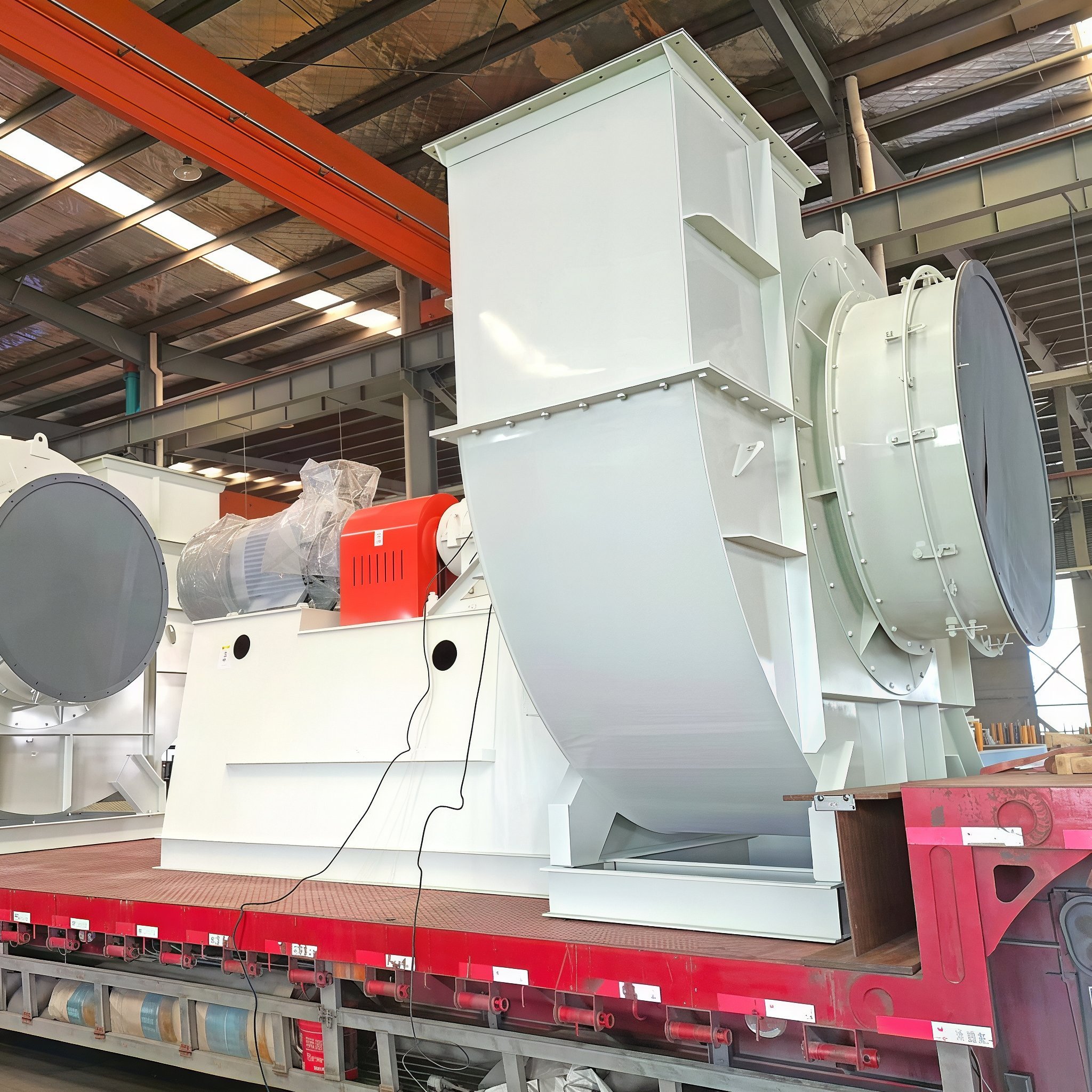
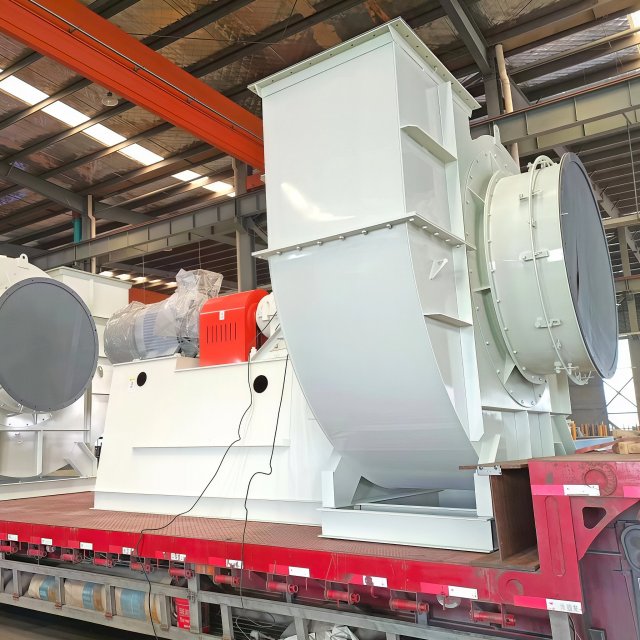
Power Plants Primary Air Fan
The primary air (PA) fan is one of the most critical auxiliary components in a power plant’s air and flue gas system, directly influencing combustion stability and the output capacity of the coal pulverizing system. Its primary function is to pressurize air and deliver it to the coal mills, while simultaneously transporting pulverized coal into the furnace. It also plays a key role in drying the pulverized coal and dynamically regulating the primary airflow.
For boiler operators, the suitability of a PA fan—in terms of its alignment with the ductwork’s characteristics, its ability to adapt to load fluctuations, and the long-term reliability of its blades and actuation mechanisms—is directly linked to the unit's availability and its auxiliary power consumption.
In terms of system configuration, the air discharged from the PA fan is typically split into two paths: one passes through the air preheater to become "hot primary air," used for drying pulverized coal; the other serves as "cold primary air," used to regulate the final air temperature and total flow volume. This dual-path (hot/cold) arrangement requires the fan to maintain a stable pressure head across varying operating conditions, placing high demands on the precision of the regulation mechanisms. This is particularly critical in direct-firing systems using medium-speed coal mills, where even minor fluctuations in primary air pressure can cause deviations in the air-to-coal ratio at the mill outlet.
Why Large-Capacity Units Prefer Variable-Pitch Axial-Flow Fans
The choice of PA fan technology generally involves a trade-off between centrifugal fans and variable-pitch axial-flow fans. Centrifugal fans, characterized by their simple design and high pressure coefficient, remain suitable for smaller-capacity units or specific operating conditions that require low flow rates combined with high pressure heads. However, for coal-fired units with capacities of 600 MW or greater, PA fans must provide sufficient margins in both flow and pressure to accommodate various operational scenarios—such as switching between coal mills, managing increased air leakage in air preheaters, or handling fluctuations in coal quality. Consequently, these fans rarely operate near their original design point for the majority of their service life.
This is where the primary advantage of variable-pitch axial-flow fans lies: the blade pitch angle can be continuously adjusted during operation, ensuring that the fan’s performance curve remains well-aligned with the ductwork’s resistance curve across a wide range of load conditions. Research on the selection of fans for 2008 t/h-class boilers indicates that axial-flow fans with adjustable-pitch blades are better suited to the frequent load fluctuations characteristic of primary air systems. These fans maintain high operating efficiency even at low loads or during changes in the configuration of operating coal mills. Empirical data shows that primary air fans designed for large-scale ultra-supercritical units can achieve flow rates of 232 m³/s and pressures of 18,273 Pa, with a peak efficiency of at least 85%—demonstrating that such fan models are a mature, proven solution for high-pressure, high-flow-rate applications.
Regarding control performance, modern axial-flow fans with adjustable-pitch blades typically employ hydraulic pitch-adjustment mechanisms governed by proportional valves, replacing traditional mechanical actuators. These systems include a fail-safe feature that locks the blades in position in the event of a hydraulic failure, preventing sudden, uncontrolled changes in airflow. For deep-peaking (flexible load) operations, some projects have adopted a combined control strategy—integrating variable-frequency drive (VFD) speed control with adjustable-pitch blade control—which simultaneously reduces throttling losses and wear on the adjustment mechanism across a wide load range.
Adaptability to Different Boiler Types
Pulverized-coal (PC) boilers and circulating fluidized bed (CFB) boilers exhibit fundamental differences in their primary air ductwork characteristics. In PC boilers, primary air pressure is primarily used to overcome resistance in coal mills, pulverized-coal piping, and burner nozzles. In contrast, CFB boilers require primary air to achieve full fluidization of the bed material; this typically necessitates a pressure head in the range of 10,000–20,000 Pa, with the maximum airflow and maximum pressure head often occurring at different operating points.
Consequently, the selection method for primary air fans in PC boilers cannot be directly applied to CFB boilers. Studies suggest that the ductwork characteristic curve for a CFB primary air fan should be fully encompassed by the fan’s performance curve. Furthermore, it is advisable to prioritize the use of inlet guide vane (IGV) control or energy-efficient variable-speed control to ensure sufficient adjustment margin for fluidization airflow, even when bed pressure fluctuates. For units that serve multiple coal mills simultaneously or must accommodate frequent variations in coal quality, the air volume and pressure margins during the fan selection phase are typically set at 30% above the Boiler Maximum Continuous Rating (BMCR) operating conditions, with additional adjustments made for the impact of summer ambient temperatures on air density.
Reliability Engineering: A Systematic Perspective from Blades to Actuators
Primary air fans are equipment characterized by a high frequency of adjustment. Changes in load demand, the startup/shutdown or switching of coal mills, and the increase in air preheater leakage over time all necessitate continuous operation of the blade-pitch adjustment mechanism. Field diagnostic data indicate that in two-stage, variable-pitch axial-flow primary air fans, wear on the actuator’s bronze bushings can lead to desynchronization between the blade angles of the two stages. This, in turn, triggers intermittent vibrations, with horizontal vibration levels potentially exceeding 11 mm/s.
To address this failure mode, product design must incorporate solutions across three dimensions. First, the aerodynamic and structural design of the blades should ensure that their natural frequencies avoid the rotational frequency and its lower-order harmonics, thereby minimizing the risk of resonance. Second, the actuation system should feature wear-compensation capabilities or a modular design that allows for in-situ component replacement, effectively shortening maintenance downtime. Third, the hydraulic control system should be equipped with "fail-safe" logic—maintaining the current blade angle in the event of a loss of hydraulic pressure or control signal—to prevent a sudden drop in primary airflow, which could otherwise destabilize furnace draft and combustion. For units that burn high-ash coal or frequently operate at low loads, applying wear-resistant treatments to blade surfaces and implementing inlet filtration are also effective strategies for extending maintenance intervals.
Selection Support and Engineering Delivery
The final selection of a primary air fan should not rely solely on nameplate specifications; rather, it must be based on an integrated analysis of the system resistance curve and the full spectrum of expected operating conditions. During the technical agreement phase, the following information should be provided: boiler type (pulverized coal-fired or circulating fluidized bed), coal pulverizing system configuration, primary airflow and pressure head at both BMCR and Boiler Rated Load (BRL) conditions, coal mill operating combinations, projected air preheater leakage rates, and the extent of load-following (peaking) duty expected from the unit. Based on these boundary conditions, the fan’s hydraulic performance curve, the adjustment range of the adjustable-pitch blades, and the motor capacity margin can be verified and matched during the design phase. This prevents common operational issues such as "oversizing leading to long-term inefficiency" or "insufficient margin restricting control capabilities."
Regarding delivery and full-lifecycle support, the product portfolio encompasses the entire value chain—from performance calculations, aerodynamic validation via scale models, and factory testing of the blade-pitch adjustment mechanism, to on-site commissioning and the supply of spare parts. For efficiency upgrades to units already in service, solutions such as variable-frequency drive (VFD) implementation, blade profile optimization, or actuator upgrades can be employed. These allow for localized performance improvements without requiring modifications to the foundation or extensive changes to the ductwork, enabling power plants to restore capacity or reduce energy consumption within limited maintenance windows.
Frequently Asked Questions
How do the roles of primary air fans, forced-draft (FD) fans, and induced-draft (ID) fans differ in a power plant?
Forced-draft fans supply the secondary air required for combustion, while induced-draft fans overcome resistance on the flue-gas side to exhaust combustion gases. Primary air fans, by contrast, are dedicated to the transport and drying of pulverized coal. They typically operate at significantly higher pressure heads than forced-draft fans and play a direct role in the output of the coal-pulverizing system and the combustion process within the furnace.
Can the same selection logic be applied to primary air fans for both pulverized-coal boilers and circulating fluidized bed (CFB) boilers?
No. In CFB boilers, the ductwork characteristics often feature a decoupling of maximum airflow and maximum pressure head, with a higher proportion of resistance attributed to the fluidized bed material. Selection must be based on the specific ductwork envelope characteristic of CFB boilers; the empirical margins used for pulverized-coal boilers cannot be applied directly.
What is the recommended maintenance cycle for the adjustment mechanism of an adjustable-pitch axial-flow primary air fan?
The wear rate of actuators and blade-pitch adjustment components is strongly correlated with the frequency of load fluctuations. It is recommended to inspect the condition of connecting rods, push-rod bushings, and copper sleeves in alignment with the unit’s scheduled maintenance outages. If vibration trends show abnormal fluctuations linked to the blade-pitch angle, the synchronization of the blade angles—particularly across different stages—should be the first point of investigation. How can the safety and economic efficiency of primary air fans be balanced during deep peak-shaving operations?
The core challenge of wide-load operation is that, at low loads, the fans operate far from their high-efficiency zones. Potential engineering solutions include the combined control of adjustable fan blades and variable-frequency drives; optimizing the configuration of coal mills during low-load periods to maintain stable primary air pressure; and incorporating an appropriate control margin during the equipment selection phase, rather than simply increasing the capacity at the design point.