Product Introduction
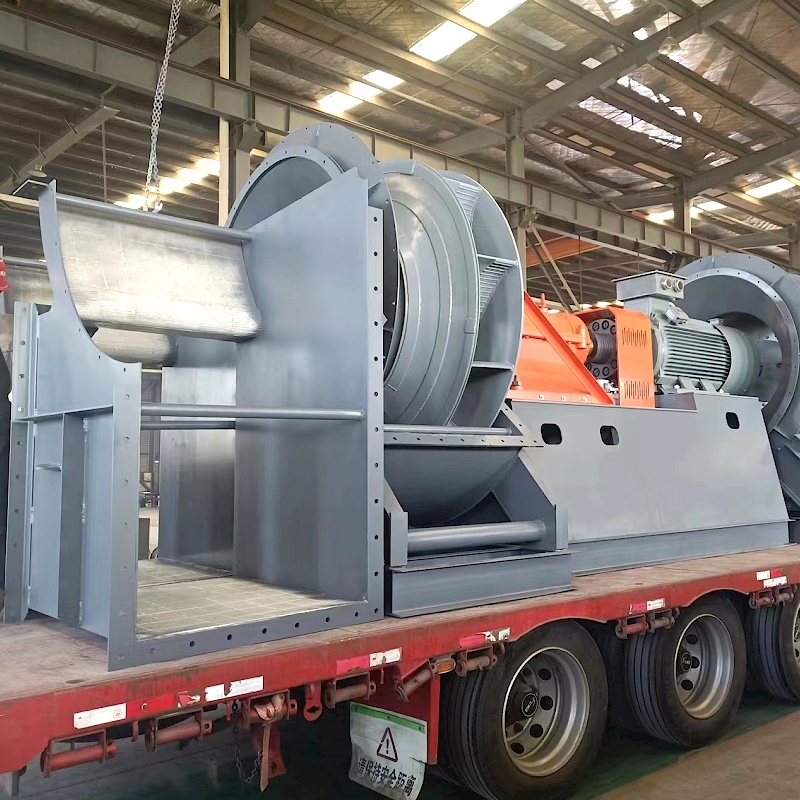
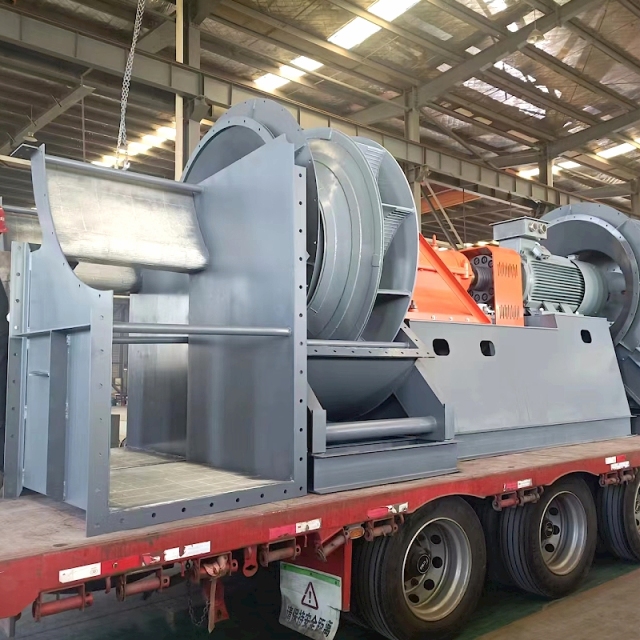
Pulverized Coal Fan
Pulverized coal fans serve as the core power equipment for transporting pulverized coal and providing forced ventilation in coal-fired power plants, cement rotary kilns, and industrial boiler pulverizing systems. Unlike standard centrifugal fans, pulverized coal fans must operate continuously over long periods in environments characterized by high dust concentrations, highly abrasive particles, and the risk of dust explosions. Consequently, they are subject to much more stringent technical requirements regarding impeller wear resistance, explosion-proof compliance, and operational stability compared to general-purpose fans. This article explores the structural characteristics, wear-resistant and explosion-proof design features, typical application scenarios, and key considerations for the selection and maintenance of pulverized coal fans, serving as a reference for procurement and technical personnel.
Why Pulverized Coal Fans Require Superior Wear Resistance and Explosion-Proof Capabilities
Pulverized coal travels within an airflow as fine solid particles, causing continuous and cumulative erosive wear on the impeller and casing. In such environments, impellers made of standard carbon steel often show significant thinning within just a few months, leading to excessive vibration and the loss of dynamic balance. Furthermore, because pulverized coal is a combustible dust—with both dust clouds and dust layers posing risks of explosion or spontaneous combustion—the equipment must be configured in accordance with dust-explosion-proof regulations rather than those for gas-based explosion hazards. Therefore, for any pulverized coal fan, wear resistance and explosion-proof compliance are non-negotiable, fundamental requirements.
Wear-Resistant Design: A Tiered Approach to Service Life
The wear resistance of a pulverized coal fan cannot be achieved through a single measure; industry-standard practice involves a tiered approach, ranging from upgrading the base material to applying surface-strengthening treatments.
At the base material level, impellers and volute casings are typically constructed from 16Mn steel plate or NM400 wear-resistant steel, both of which offer significantly better abrasion resistance than standard Q235 steel. In high-wear applications, materials such as high-manganese ductile iron liners or wear-resistant alloy steels are employed to slow the rate of wear at the substrate level. In terms of surface strengthening, tungsten carbide hardfacing is one of the most widely used techniques. It creates a high-hardness cemented carbide layer on the working surfaces of the impeller blades, providing direct resistance against the erosive cutting action of pulverized coal particles. For areas subject to concentrated wear, wear-resistant ceramic lining—involving the bonding of ceramic tiles to the inner walls of the impeller and casing—offers a level of hardness far superior to that of metallic materials. Impellers treated with these composite wear-protection methods exhibit a service life approximately three times longer than untreated components, and three to five times longer than those made from 16Mn base steel.
From a structural perspective, some pulverized coal fans are designed so that the coal dust does not pass directly through the impeller. Replaceable wear liners are installed within the volute casing; when these liners wear out, they can be replaced individually rather than requiring the replacement of the entire unit, thereby reducing long-term maintenance costs.
Explosion-Proof Configuration: A Comprehensive Approach to Dust Explosion Prevention
Explosion protection for pulverized coal fans is not merely a matter of selecting an explosion-proof motor; it is a systematic configuration encompassing electrical and structural design, as well as operational and maintenance protocols.
Electrical explosion protection serves as the foundation. For pulverized coal applications, dust-explosion-proof motors—typically designated as "Ex tb IIIC T130℃ Db" and designed/certified in accordance with the GB 12476 series of standards—must be used. In environments where both combustible gases and dust may be present, motors with dual-rated explosion protection (covering both gas and dust hazards) should be selected—for example, those bearing both "Ex db IIC T4 Gb" and "Ex tb IIIC T130℃ Db" markings.
Structural explosion protection is equally critical. The casing should be designed to eliminate horizontal surfaces where dust could accumulate, as well as "dead zones" where material might stagnate; incorporating sloped bottom plates and dedicated dust-removal ports helps minimize the conditions that could lead to the spontaneous combustion of accumulated coal dust. Impellers are typically constructed from aluminum alloy or stainless steel and treated to be anti-static, which helps suppress frictional sparks and electrostatic discharges. Furthermore, the entire unit must be equipped with equipotential grounding, and conductive jumpers should be installed across pipe flanges to prevent the buildup of static electricity. In terms of operational monitoring, online tracking of bearing temperatures and casing surface temperatures facilitates the early detection of abnormal heat buildup. Additionally, an inert gas interface can be used to reduce the oxygen content within the system when necessary—measures that complement passive protection strategies from an operational standpoint.
Typical Application Scenarios for Pulverized Coal Fans
The selection of a pulverized coal fan is highly dependent on the specific operating environment, with priorities varying across different industries.
Coal-fired power plant pulverizing systems represent the primary application area for these fans, which are used for forced ventilation and the transport of pulverized coal in systems such as medium-speed mills and ball mills. Series such as the M6-31 and M9-26 are widely used in these settings, offering air volume capacities ranging from several thousand to over 100,000 cubic meters per hour, with total pressures spanning from several thousand pascals to upwards of 17,000 pascals. Power plant operations demand exceptional reliability for continuous running; consequently, the wear resistance of the impeller and compliance with explosion-proof standards are critical criteria during the procurement evaluation process.
In the context of pulverized coal preparation for cement rotary kilns, the transport of pulverized coal at both the kiln inlet and outlet necessitates high-temperature adaptability. Certain models can operate in environments with intake air temperatures of up to 120°C, while impeller designs that resist dust accumulation help mitigate vibration issues caused by the buildup of cement dust.
In industrial boilers and coal injection systems, pulverized coal fans serve as primary air fans, providing the carrier medium for coal transport. Pipeline air velocities are typically maintained between 22 and 28 m/s to ensure the coal remains suspended and to prevent sedimentation or pipe blockages. Selection must account for both the required air volume and the specific resistance characteristics of the ductwork.
Key Considerations for Selecting Pulverized Coal Fans
While air volume and air pressure are the explicit parameters for selecting a pulverized coal fan, long-term performance is determined by several less obvious factors.
The temperature of the medium and the specific characteristics of the coal type dictate the requirements for materials and explosion-proof configurations. Most pulverized coal fans are designed for media temperatures not exceeding 80°C, though specialized high-temperature models can handle temperatures above 200°C; therefore, the temperature limits must be verified against the actual operating conditions. The dust-layer ignition temperature for a specific coal type must be determined through actual testing, and the surface temperature limits for equipment must incorporate an appropriate safety margin.
The wear-resistance grade should be selected based on pulverized coal concentration, particle hardness, and the anticipated maintenance interval. Higher coal concentrations and harder particles necessitate more robust solutions—such as tungsten carbide hardfacing or ceramic lining—rather than merely upgrading the base material.
The drive and adjustment configuration affects operational and maintenance convenience. A "Type D" (overhung, coupled) drive arrangement is common for pulverized coal fans; it offers a compact design and allows the rotor to be removed during maintenance. The discharge angle can typically be customized (ranging from 0° to 225°) to accommodate site-specific ductwork layouts.
Installation and Maintenance Essentials
The long-term reliability of a pulverized coal fan depends heavily on the quality of its installation, commissioning, and periodic maintenance. Fans must undergo proper installation and trial runs in accordance with established procedures before entering formal service. If abnormal vibration, excessive bearing temperature rise, or current overloads occur during operation, the unit must be shut down immediately for inspection.
Impeller management is the core of maintenance. Both dust accumulation and wear can compromise dynamic balance; therefore, regular cleaning and monitoring of wear-related material loss are essential. If an impeller is repaired via welding, it must undergo re-balancing; otherwise, vibration issues will quickly recur.
Bearing condition should be continuously monitored via temperature and vibration metrics. Generally, bearing temperature should not exceed the ambient temperature by more than 40°C, and the RMS (root mean square) vibration velocity of the bearing housing should ideally be kept below 6.3 mm/s. For new fans, bearing grease should be replaced after approximately 5,000 hours of operation; subsequent replacement intervals should be determined based on actual operating conditions.
Explosion-protection components must be included in the routine inspection checklist, covering the continuity of grounding connections, the integrity of anti-static measures, dust accumulation on the casing, and the clear condition of dust-removal ports. Compliance with dust-explosion safety standards is not a one-time certification, but the result of ongoing maintenance.
Frequently Asked Questions
Why are pulverized coal fans configured for dust-explosion protection rather than gas-explosion protection? Pulverized coal exists in the form of solid particles and is classified as combustible dust; therefore, it falls under the scope of the GB 12476 series of standards for dust explosion protection. Standards for gas-based explosion protection, by contrast, apply to environments containing combustible gases; the two categories differ in their protection principles and marking systems. If a system contains both combustible gases and dust, a combined explosion-proof configuration covering both types of hazards must be selected.
What is the typical service life of an impeller in a pulverized coal fan?
When equipped with tungsten carbide hardfacing or wear-resistant ceramic lining, the service life of an impeller can be extended by approximately three times compared to an untreated unit. The actual lifespan depends on factors such as pulverized coal concentration, particle characteristics, operating duration, and the quality of maintenance. In high-wear environments, inspection intervals should be shortened, and replacement decisions should be based on measured wear thickness rather than a fixed time schedule.
Can pulverized coal fans be used to transport gases containing sticky substances?
Standard pulverized coal fans are designed for gas media that are non-corrosive, non-spontaneous, and free of sticky substances. Gas streams containing sticky materials tend to cause dust accumulation on the impeller and the inner walls of the casing, which disrupts dynamic balance and accelerates localized wear. Such applications require a separate assessment or the selection of a specialized model designed to prevent dust buildup.
Can the outlet angle and rotation direction be customized to match on-site piping?
Yes. Most pulverized coal fans are available in both clockwise and counter-clockwise rotation configurations. Outlet angles can be manufactured in increments such as 0°, 45°, 90°, 135°, 180°, and 225° to accommodate various piping layouts and site-specific spatial constraints.
If you require selection calculations based on specific coal types, pulverizing system configurations, or airflow and pressure parameters—or if you need technical advice regarding wear-resistant and explosion-proof configurations—please contact our engineering team for customized solutions and product documentation.