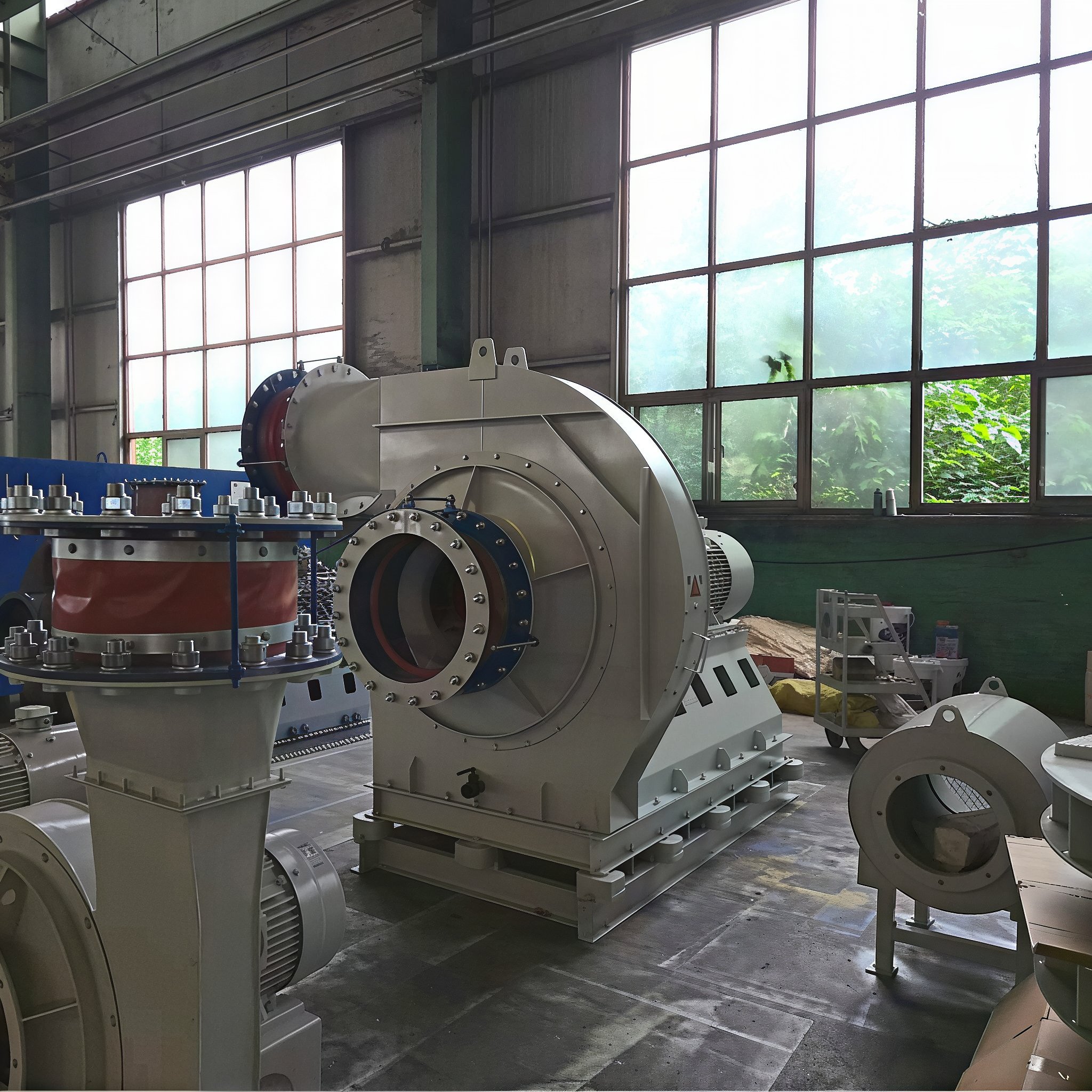
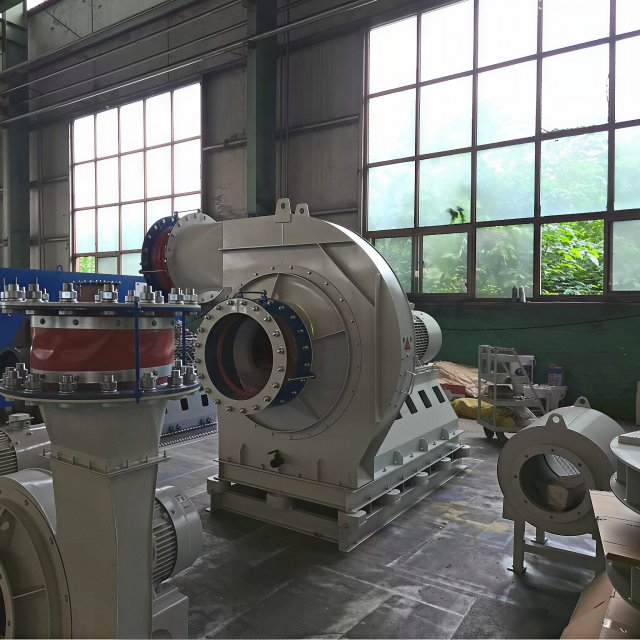
Yellow Phosphorus Off-Gas Fan
Yellow phosphorus off-gas fans are critical equipment used to process electric furnace off-gases in phosphorus
chemical production. These off-gases contain high concentrations of carbon monoxide (80%–95%) along with impurities such as phosphorus, sulfur, and fluorine. Operating at temperatures between 45°C and 60°C, these conditions place constant demands on the fan’s sealing integrity, the
corrosion resistance of its flow-path components, and its long-term operational stability.
Any failure—whether through shaft seal leakage or impeller corrosion—can lead to unplanned downtime and pose direct risks to personnel safety and environmental regulatory compliance. The following sections outline the essential requirements for a suitable yellow phosphorus off-gas fan, focusing on four key areas: sealing, materials, maintenance, and equipment selection.
Sealing: Why "Zero Leakage" Is a Baseline, Not an Option
The carbon monoxide in yellow phosphorus off-gas is both toxic and combustible, while phosphorus can spontaneously ignite at temperatures as low as 35°C; therefore, any leakage constitutes a serious safety incident. Standard packing seals or single mechanical seals are prone to wear from phosphorus- and sulfur-containing dust, which causes gaps to widen over time and increases the risk of leakage.
Reliable yellow phosphorus off-gas fans typically employ a combination of "aerodynamic sealing" and "nitrogen purging." Aerodynamic sealing utilizes the fan’s own pneumatic performance to create a barrier, requiring no vulnerable components within the seal cavity. Nitrogen purging acts as an isolation gas source, establishing a positive-pressure barrier at the shaft end that pushes the off-gas back into the fan casing.
The primary value of this combined approach lies not in theoretical "sealing class" specifications, but in its ability to maintain effectiveness without requiring frequent replacement of sealing components—fundamentally reducing the likelihood of leaks caused by seal degradation. Furthermore, the fan must be paired with an
explosion-proof motor (rated at least dⅡBT4) to ensure a complete, safe, and closed-loop system.
Corrosion Resistance and Fouling Prevention: Material Selection Determines Continuous Operational Cycles
The corrosion caused by yellow phosphorus off-gas is not the result of a single mechanism. Impurities such as H₂S, PH₃, and HF create an acidic, corrosive environment in the presence of moisture. Furthermore, P₂O₅—produced by the combustion or oxidation of P₄ and PH₃—reacts with water to form phosphoric acid, leading to a synergistic corrosive effect on metal components involving phosphidation, sulfidation, and oxidation.
Additionally, phosphorus dust and other particulates in the off-gas tend to accumulate on the impeller surfaces, disrupting dynamic balance and causing vibration as well as premature bearing failure.
Given these operating conditions, a "one-size-fits-all" approach to impeller material selection is inappropriate. While stainless steel or various alloys may suffice for standard applications, scenarios with higher corrosive loads require more robust solutions, such as 316L stainless steel or flow-path components treated with specialized surface coatings to extend service life. Applying an epoxy resin coating to the inner walls of the casing serves as a cost-effective, supplementary anti-corrosion measure, creating a protective barrier between the carbon steel substrate and the corrosive media. From a structural perspective, a backward-curved impeller paired with a water-wash system is highly advantageous; the backward-curved blades are inherently resistant to fouling, and the integrated water-wash ports allow for impeller cleaning—either during scheduled downtime or while the unit is online—effectively transforming anti-fouling from a passive material-dependent property into an active, manageable maintenance task.
Ease of Maintenance: An Underestimated Selection Criterion
Because phosphorus chemical plants rely on continuous production, any maintenance procedure requiring the removal of inlet or outlet piping inevitably extends downtime and increases the risks associated with restarting operations. For fans handling yellow phosphorus off-gas, design variations in how the rotor assembly is removed or installed are critical: certain models allow for the removal of the rotor assembly without disturbing the inlet or outlet piping, significantly shortening the time required for impeller cleaning and seal inspections.
Compared to grease lubrication, an oil-based (circulating) lubrication system is better suited for bearings operating continuously at high temperatures, with well-established protocols for oil replacement and quality monitoring. When selecting equipment, incorporating "maintenance accessibility" and "spare parts replacement time" into the evaluation often yields greater long-term value than focusing solely on the initial purchase price. Selection and Adaptation: From "Capable of Transport" to "Stable Delivery"
For yellow phosphorus off-gas, a fan with a relatively flat performance curve is preferred; this ensures that fluctuations in pipeline network resistance result in only minimal changes to airflow, thereby providing greater flexibility for system regulation. The outlet orientation can be configured at 0°, 90°, or 180°, and the rotation direction can be customized as either clockwise or counter-clockwise, which helps minimize the need for on-site piping modifications.
The matching of airflow and pressure boost should be determined based on a comprehensive assessment of actual operating conditions—including off-gas flow rate, system backpressure, and temperature—rather than by pursuing a single, isolated high-performance parameter. For ultra-high-temperature applications (such as scenarios involving heat recovery after off-gas combustion), specialized high-temperature alloy solutions must be evaluated; standard fans for yellow phosphorus off-gas are typically designed for operating temperatures ranging from 45°C to 60°C.
Typical Application Scenarios
These fans are specifically designed for the pressurized transport of off-gas in yellow phosphorus plants. They are also suitable for handling other gases that require high levels of airtightness, such as ammonia or biogas. In processes involving power generation from yellow phosphorus off-gas, pre-treatment for gas purification, or pressure boosting for downstream combustion, the reliability of the fan’s sealing system and the service life of its flow-path components are critical factors that directly influence the overall availability of the off-gas handling system.